3 Quality Management Tools That Improve Inspection Accuracy

Quality Management Tools

Inspection accuracy is something that many organizations take for granted to be working well until a problem occurs.

It is true that a minor error during the inspection process may result in product defects. However, the problem may not be the inspector. Rather, the problem may be the system through which the inspection process is carried out.

Over the years, quality teams have realized that the accuracy of the inspection process increases manifold when the right quality management tools are employed. Instead of depending on the inspector’s memory, the right quality management tools provide a system of consistency.

In the following article, we shall discuss three quality management tools that help an organization improve the accuracy of the inspection process.

Why Inspection Accuracy Matters in Quality Control?

Accurate inspection is vital in ensuring quality products. If inspection is not effective in detecting problems and conveying adequate information, quality problems may advance further down the line.

The consequences may be:

  • Defective products reaching the customer
  • Increased costs in operations
  • Delays in the process during a compliance audit
  • Inadequate information on quality trends

The purpose of inspection is to identify problems at an early stage. This is because problems are easier and cheaper to correct at an early stage.

Therefore, quality management tools have emerged as a vital aspect in quality control.

In many cases, organizations only realize gaps in their inspection process when evidence starts getting questioned during audits or internal reviews.

1. Digital Quality Control Checklists

The concept of a digital checklist may seem simple, but it is a step towards solving one of the most common causes of inspection errors, which is related to documentation.

The problem with inspectors is that, depending on their memories, they may end up missing some of the most important inspection tasks, as well as varying the way they document them each time.

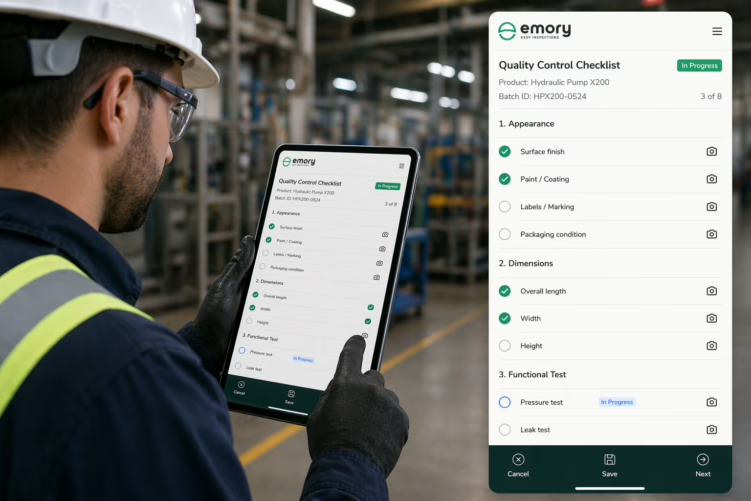
A quality control checklist application is a system that offers a structured inspection system where inspectors are required to carry out an inspection based on a predefined checklist.

How Digital Checklists Improve Accuracy?

Digital checklists improve inspection accuracy in several ways.

Mandatory inspection fields
Inspection reports cannot be submitted until all required checkpoints are completed.

Standardized inspection steps
Every inspector follows the same sequence of checks, ensuring consistency across teams and locations.

Photo and evidence attachments
Inspectors can attach photos directly to checklist items, providing visual confirmation of inspection findings.

Automatic timestamps
Inspection records include timestamps and inspector details, improving traceability.

When inspection steps are clearly defined, the risk of missing critical checks decreases significantly.

2. Statistical Process Control (SPC)

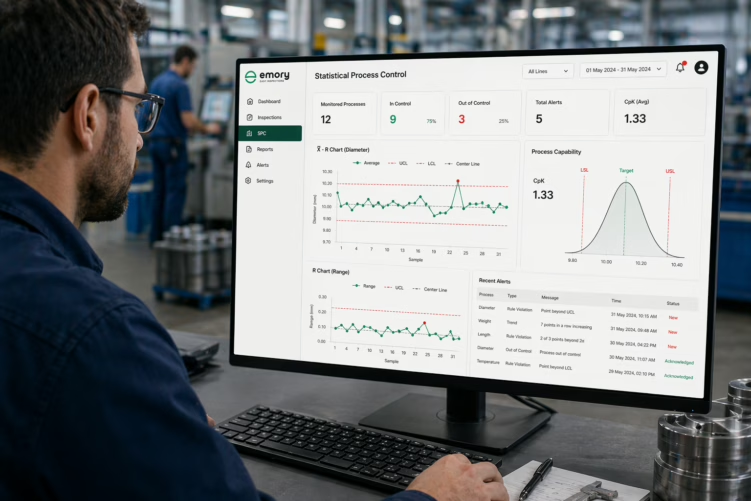
Statistical Process Control (SPC) is an established quality management technique that is frequently employed in manufacturing and production settings.

Instead of completely depending on physical inspection, the use of statistical data is employed to monitor the performance of the process and the identification of variations.

How SPC Improves Inspection Accuracy?

SPC allows quality teams to identify patterns that may not be visible through individual inspections.

For example:

  • Identify recurring defects in production lots
  • Identify calibration issues in equipment
  • Identify variations in the measurement of products

By analyzing inspection and production data over time, teams can determine whether issues are random or linked to deeper process problems.

This data-driven approach reduces guesswork and helps inspectors focus on areas where quality risks are most likely to occur.

3. Digital Inspection and Quality Control Apps

Traditionally, quality systems have separate tools like spreadsheets, emails, and manual log files.

A quality control app, on the other hand, combines all these into one tool.

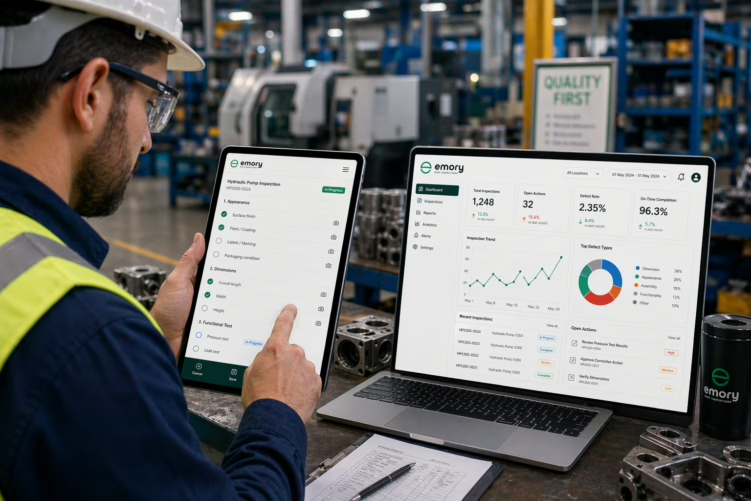
This results in a single, central process where inspection data can be easily recorded, stored, and processed.

Features That Improve Inspection Accuracy

Quality control apps typically support inspectors through features such as:

Inspection Workflows

Guided inspection processes ensure that all areas are inspected.

Real-time data capture

Data is recorded on the go instead of manually filling out log files.

Photo documentation and annotations

Inspectors can even annotate inspection images with issues.

Automated reporting

Inspection reports can be easily created in predefined formats.

These features help reduce manual errors and make inspection records easier to review during audits.

Combining Tools for Stronger Quality Management

There is no single tool that can fix all quality-related challenges.

In fact, organizations tend to get the best results by using a combination of different tools within a quality management system.

For example:

  • Digital checklists ensure that inspections are conducted according to a proper sequence
  • SPC helps track quality trends as well as process stability
  • Quality control apps provide a centralized system for inspections

Together, these tools create a more reliable inspection system and improve overall transparency.

Practical Tips for Implementing Quality Management Tools

Introducing new quality tools should be done carefully. A rushed rollout can lead to resistance from inspection teams.

Some practical steps include:

Start with one inspection workflow
Begin with a single process before expanding across the organization.

Standardize templates early
Define inspection fields, documentation requirements, and photo guidelines.

Train inspectors properly
Even simple tools require clear guidance for consistent use.

Review inspection reports regularly
Monitoring reports helps ensure that new tools are improving documentation quality.

Small improvements early in the process often prevent larger quality issues later.

How Emory Pro Supports Structured Quality Inspections?

We at Emory Pro frequently observe that the accuracy of inspection improves by moving away from the use of disconnected tools and embracing structured digital inspection processes.

Typically, quality teams face challenges when they have inspection data scattered across various tools and documents. This ultimately becomes challenging for them to track inspection history or identify common issues.

With the use of Emory Pro, teams can maintain inspection checklists and inspection data collected during the inspection. Additionally, they can maintain inspection documents in a centralized environment. This will allow them to maintain consistent inspection records and will be more convenient for them to track inspection history if and when required. 

For teams that manage multiple inspection processes within their organization, embracing structured inspection processes will be more convenient for them.

Final Thoughts

However, it is very rare that the accuracy of inspections is improved by encouraging inspectors to be more precise and accurate in their work.

In most cases, it is only when inspectors are aided by systems and documented processes that the accuracy of the inspection is improved.

Quality management tools, such as digital checklists, statistical process control, and inspection apps, are useful for organizations that aim to eliminate errors and ensure that inspection data is accurate.

In cases where the inspection is made consistent and documented, it is easier for the quality problems that are identified to be resolved.

FAQ’s

A quality control checklist app is an application that allows users to carry out inspections through checklists, record inspection information, add images to inspection reports, and generate reports from inspection activities.

A quality control app helps improve inspection accuracy by standardizing inspection processes and ensuring that all required inspection activities are carried out and inspection information is stored in a centralized system.

Statistical Process Control is important in quality management because it helps quality management teams identify changes in processes through data analysis, helping them to identify problems before they cause product defects.

Start your free trial today.

Teams adopt Emory Pro not when inspections fail—but when evidence starts getting questioned.