

How to Standardize Inspection Documentation for Audit-Ready Multi-Location Operations

Standardize Inspection Documentation

Running inspections within a single facility is usually easy to handle. The teams are using the same checklist; the reports are stored in the same location; and it doesn’t require a lot of work to review the documentation.

However, things become more complicated when inspections are conducted across various facilities. Five facilities? Ten facilities? Twenty? At that point, documentation starts to diverge.

One team may use spreadsheets to document their findings. Another team may use printed checklists. The other team may use photos but forget to document proper notes. While none of these are wrong by themselves, it is a problem when it is a combination of different methods.
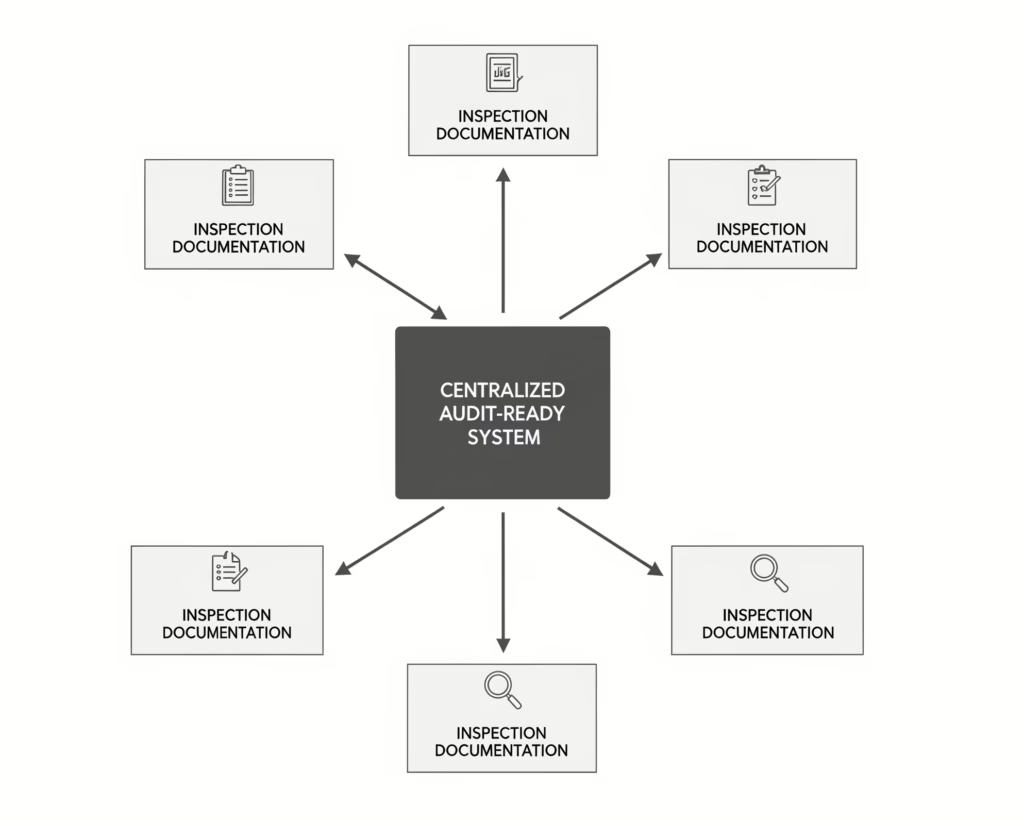
Conceptual visual of standardized inspection documentation across multiple locations.

Eventually, it becomes a problem. When an audit comes along, teams are spending more time searching for documentation instead of reviewing their results.

Standardizing inspection documentation is more than just keeping everything organized. It is also a part of compliance, traceability, and operational management.

However, before fixing a problem, it is important to know why it is happening.

Why Inspection Documentation Becomes Inconsistent

Most organizations do not suffer from inconsistent documentation by design. Instead, inconsistent documentation is a product of gradual evolution over time as teams tend to form their own ways of working.

The following are some of the most common reasons for inconsistent documentation:

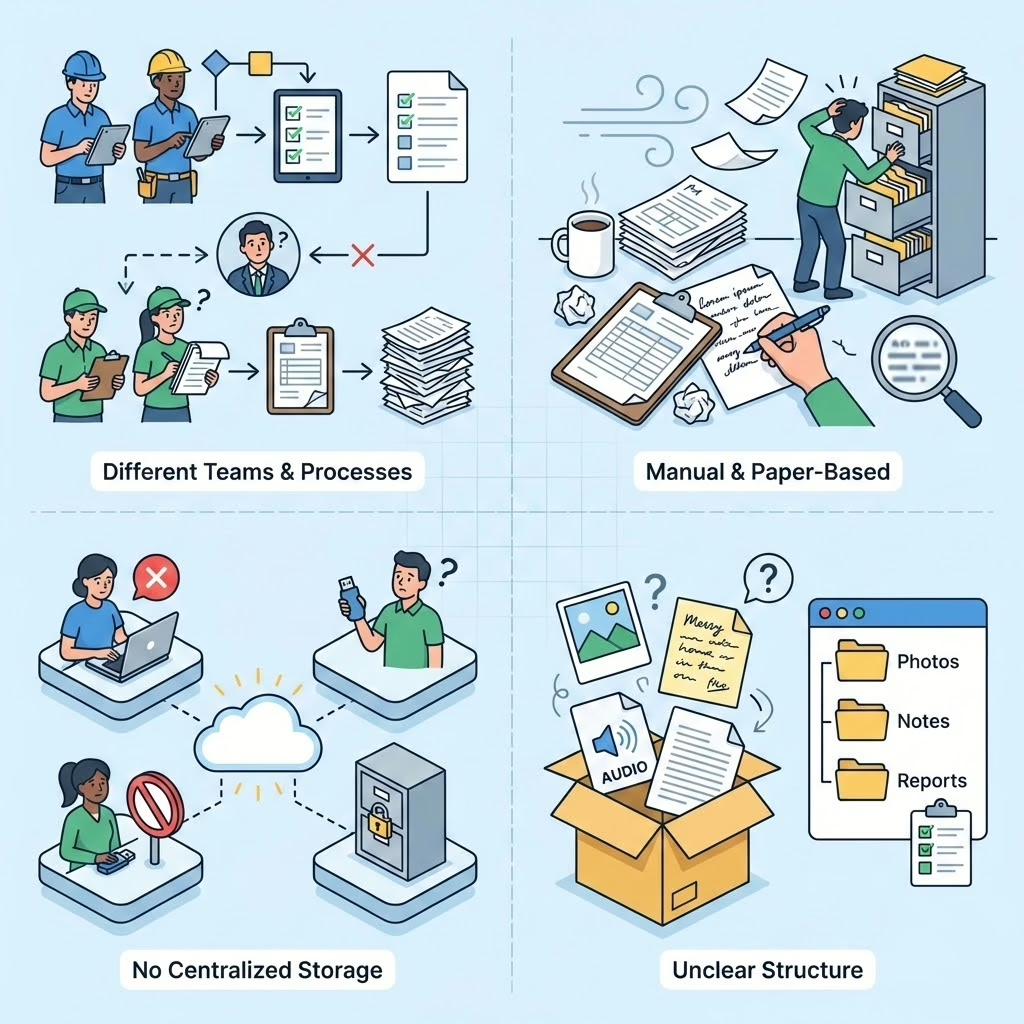
common reasons for inconsistent documentation

Different Teams, Different Processes : Each facility has its own inspection process. Even if guidelines are provided, teams may interpret these slightly differently.

Manual Checklists and Paper Forms: Paper forms are easy to misplace or interpret differently by different team members. In some instances, documentation is left to individual team member habits.

Lack of Centralized Data Storage: If inspection data is not stored centrally, teams are not able to access standardized templates or data from past inspections.

No Clear Documentation Structure: Without set standards on how to document photos, notes, and inspection results, documentation is likely to be inconsistent.

The outcome is obvious. Auditors are likely to be confused by inconsistent documentation, including missing information or reports that are presented in entirely different formats.

The Real Risks of Unstandardized Inspection Records

Many organizations underestimate the impact of inconsistent inspection documentation.

When records differ across locations, several operational risks can appear.

Compliance Problems

Regulatory audit teams anticipate consistent documentation of records. If fields are missing or not properly documented in the inspection records, compliance issues may arise.

Audit Delays

Auditors may need additional time to audit records in cases where documentation formats vary across locations.

Poor Operational Visibility

Managers cannot easily compare inspection records across locations if the format of the reports varies.

Higher Operational Risk

Small operational risks may not come to light if records are not consistent or traceable.

The problems can be mitigated through standardization, which helps avoid these problems turning into operational issues.

How to Standardize Inspection Documentation Across Multiple Locations?

Step 1: Define a Universal Inspection Framework

The first step is the establishment of the inspection framework that will be followed by all the locations.

The inspection framework will include the following details:

  • Inspection fields that need to be inspected
  • Photo documentation requirements
  • Severity levels of the issues
  • Inspector identification
  • Timestamp and location details

Instead of allowing the inspection documentation to be done differently at various locations, the organization will develop an inspection template that will be followed by all the locations.

A simple inspection framework will be effective in reducing the documentation inconsistencies.

Step 2: Replace Paper with Digital Inspection Templates

This is because the inspectors may have different ways of handling the paperwork. Digital inspection templates assist in the elimination of the above challenges. 

A digital inspection system generally ensures that the following requirements are met:

  • The mandatory inspection fields will be completed
  • Photos will be attached directly to the inspection items
  • Notes will be in the same format
  • Inspection records will contain timestamps

The second advantage of using digital inspection templates is that they can be updated. This implies that if the inspection requirements change, the updated templates will be sent to the entire enterprise.

Step 3: Create Location-Specific Layers Without Changing the Core Template

This does not imply that the same inspection procedure needs to be followed in all facilities.

Different facilities might have different equipment, regulatory requirements, and operating conditions.

A simple way of handling this is to keep the basic inspection template the same and add optional modules as necessary.

For example:

Core inspection template

  • Safety checks
  • Equipment condition
  • Compliance verification

Location-specific modules

  • Climate-sensitive equipment checks
  • Local regulatory inspections
  • Specialized machinery inspections

This approach maintains consistency while allowing flexibility where necessary.

Step 4: Implement Centralized Data Storage

Another common challenge is the issue of fragmented inspection storage.

When inspection reports are scattered in different folders, spreadsheets, and local machines, it becomes hard to standardize documentation.

A centralized system for inspection records should be able to help teams:

  • Upload inspection reports in real-time
  • Access shared inspection templates
  • Track historical inspection data
  • Compare inspection data from multiple locations

When inspection records are stored in a single location, documentation becomes much simpler.

Step 5: Train Inspectors on Documentation Standards

A good inspection process may not work if the inspectors do not understand the documentation process.

The areas of guidance should include:

  • How to record the results of the inspection
  • What kind of pictures should be taken
  • What categories should be used
  • How to write a good inspection report

Most organizations assume that inspectors will follow a template properly without additional guidance. A short training session may greatly help in improving the quality of the documentation.

Step 6: Monitor Documentation Quality Regularly

Standardization is a continuous process that needs to be reviewed regularly.

The following areas need to be reviewed regularly by evaluating the inspection reports:

  • Missing documentation
  • Poor image evidence
  • Incomplete inspection checklists
  • Inconsistent descriptions of issues

Digital inspections can help managers better review their inspection records and identify missing documentation.

How Digital Inspection Apps Simplify Standardization

At Emory Pro, we have witnessed how inspection documentation can become increasingly difficult to manage when an organization expands and has operations in multiple locations. This is due to how inspection data is recorded, and it eventually leads to information gaps.

Digital inspection workflows can effectively address these issues since they impose order on how inspection data is recorded and stored.

With Emory Pro, we can:

  • Design inspection templates that can be utilized in all facilities
  • Conduct inspections and capture photos and data
  • Organize inspection data in one place
  • Review historical inspection reports if necessary
  • Ensure consistent documentation across all facilities

For organizations that have operations in multiple facilities, having a digital inspection workflow can ensure that inspection data remains clear, easily searchable, and reviewable.

Final Thoughts

While the documentation of inspection might be considered an ordinary procedure, it is an essential aspect of compliance and transparency. 

While inspection data differs from one place to another, it becomes dixfficult to compare and be better prepared for audits. 

With the introduction of the common inspection framework and the use of digital templates and inspection record management, it becomes easier to develop the documentation process that meets the needs of the entire organization. 

At Emory Pro, we believe in the importance of structuring the inspection workflow so that the inspection data becomes more accessible and easier to review.

FAQ’s

The need for consistent inspection documentation in an audit is that it helps the auditor verify that inspection procedures have been correctly implemented in all locations. 

Yes, it is possible. A universal inspection template can be developed, and if necessary, additional modules can be included.

Start your free trial today.

Teams adopt Emory Pro not when inspections fail—but when evidence starts getting questioned.