Digital Inspection
Digital Vehicle Inspections with Photo & GPS Tagging: Why It Matters
Learn why photo and GPS-tagged vehicle inspections have become the standard for compliance, asset protection, and inspection quality in modern operations.

Mobile vehicle inspections now drive daily operational control. Fleets, logistics teams, and inspection-led businesses rely on accuracy, traceability, and real-time accountability. Digital inspection tools with photo and GPS tagging deliver that control through verified data captured at the point of work.
For operators facing liability claims, this means moving beyond simple checklists to a dedicated vehicle damage inspection app that forces accountability.
Each inspection records condition, location, and time in one system. Teams gain clarity. Managers gain confidence. Operations scale with consistency.
This shift defines how modern organizations protect assets, reduce disputes, and maintain inspection quality across growing fleets.
The Strategic Evolution Of Digital Vehicle Inspections
From Manual Checks To Mobile Intelligence

Vehicle inspections moved from paper checklists to mobile-first systems designed for field execution. A digital vehicle inspection app captures structured data the moment an inspection happens.
Inspectors record vehicle condition, safety checks, and compliance status on-site. Photos, GPS coordinates, and timestamps attach automatically to each report. This approach strengthens visibility across distributed teams and remote operations.
Digital inspection workflows create a single source of truth. Teams follow consistent processes and access inspection records instantly.
Why Context Matters In Vehicle Inspections?
Every inspection carries operational and legal importance. Photo and GPS tagging add verifiable context to each inspection event.
Photos document physical conditions clearly. GPS data confirms inspection location. Timestamps establish inspection sequence and accountability.
Together, these elements turn inspections into defensible, data-backed operational records that stand up to audits, claims, and internal review. For logistics managers, this establishes a secure digital audit trail for vehicle transportation, linking every asset movement to a verifiable location.
Photo-Tagged Vehicle Inspections: Visual Proof At Scale
Visual Evidence As An Operational Standard
Photo-tagged vehicle inspections capture condition details with clarity. Images document scratches, dents, tire wear, cargo damage, and safety concerns in real time. Using a mobile inspection app with photo tagging ensures that every defect is not just captured, but precisely mapped to the vehicle diagram for instant clarity.
This visual evidence removes ambiguity. Teams make faster decisions with shared understanding. Maintenance actions move forward without delays.
Photo documentation improves inspection quality and reduces rework.
Consistency Across Teams And Locations
Mobile inspection tools guide inspectors through standardized photo capture steps. Teams follow the same inspection flow across vehicles, depots, and regions.
This consistency improves data quality at scale. Organizations compare inspection records reliably across thousands of vehicles.
Standardization strengthens operational discipline.
Dispute Prevention And Liability Protection
Photo evidence creates objective inspection records. Organizations resolve claims faster with images tied directly to inspection data.
Clear documentation supports handovers, audits, and compliance checks. Inspectors, operators, and businesses stay protected through factual clarity.
GPS-Enabled Inspection Tools: Location As A Trust Layer
Location Verification In Real Time
GPS-enabled inspection tools confirm where inspections occur. Each inspection record includes precise location data aligned with routes, depots, job sites, or delivery points.
Location verification strengthens trust across teams and partners.
Operational Transparency Across Distributed Fleets
Fleet managers monitor inspection activity across regions in real time. GPS tagging supports performance tracking and route-level insights without manual reporting.
Location intelligence turns inspections into actionable operational signals. Teams managing high-volume logistics operations, including Portagent, use this model to maintain inspection visibility while scaling across locations.
Compliance And Audit Readiness
Many regulations require accurate inspection records. GPS-tagged inspections meet these expectations with verified location data attached to every report.
Audit preparation becomes faster and more reliable.
Why Mobile Vehicle Inspections As A System, Not A Feature?
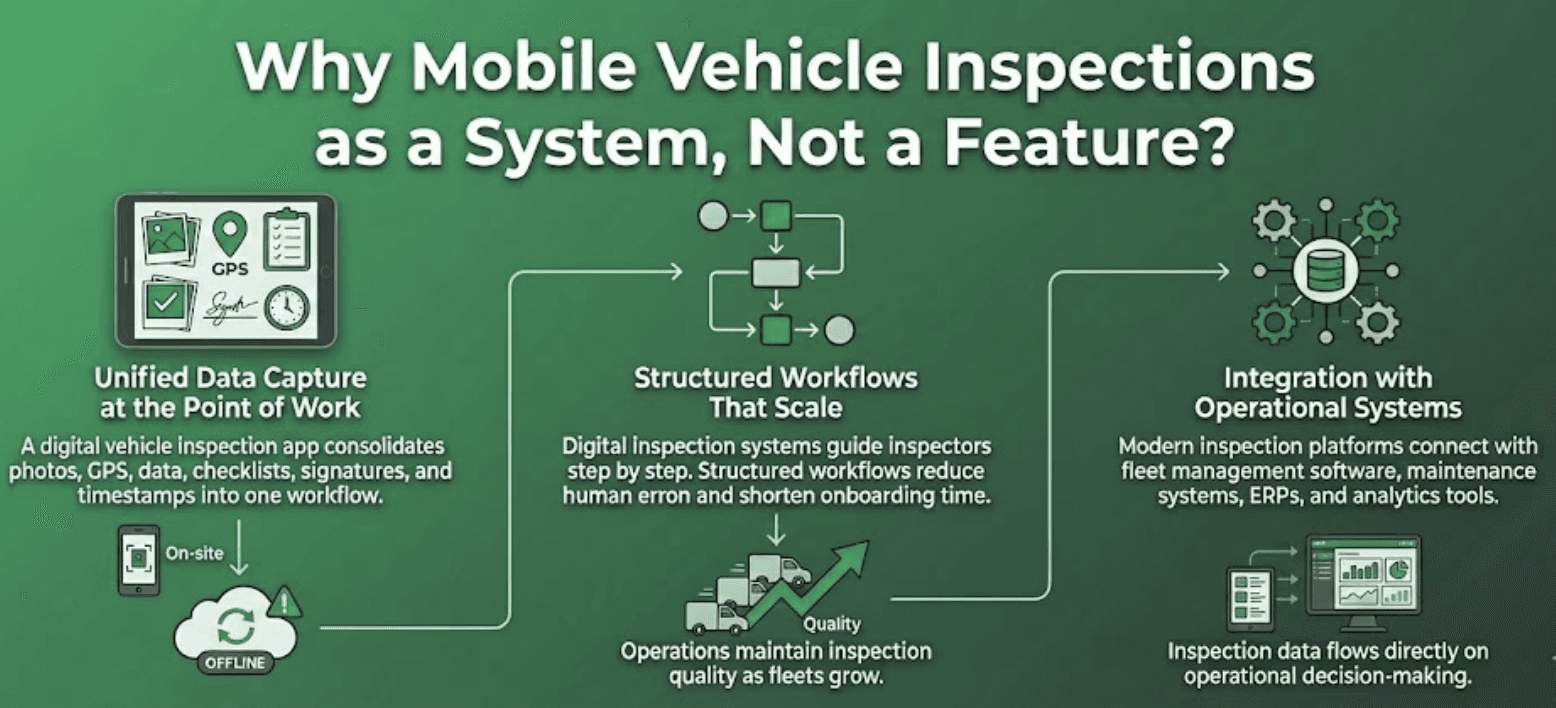
Unified Data Capture At The Point Of Work
A digital vehicle inspection app consolidates photos, GPS data, checklists, signatures, and timestamps into one workflow.
Inspectors capture data on-site using a mobile device. Offline inspections continue without interruption.
Data syncs automatically when connectivity returns.
Structured Workflows That Scale
Digital inspection systems guide inspectors step by step. Structured workflows reduce human error and shorten onboarding time.
Operations maintain inspection quality as fleets grow.
Integration With Operational Systems
Modern inspection platforms connect with fleet management software, maintenance systems, ERPs, and analytics tools.
Inspection data flows directly into operational decision-making.
Business Impact Of Photo & GPS-Tagged Vehicle Inspections
Faster Decision-Making
Verified inspection data enables quicker maintenance actions and risk response. Managers act with confidence based on real-time information.Speed supports operational resilience. Fleet operators such as Cross Trans rely on this approach to reduce reporting delays and coordinate inspections across distributed teams.
Reduced Operational Risk
Accurate inspection records reduce disputes, compliance gaps, and asset misuse. Organizations move from reactive risk handling to proactive control.
Stronger Customer And Partner Trust
Transparent inspection records build confidence with customers, insurers, and partners. Clear documentation signals professionalism and reliability.
Trust supports long-term relationships.
Why Emory Pro Represents The Future Of Vehicle Inspections?
Built For Field Reality
Emory Pro supports offline inspections, mobile workflows, and real operating conditions. Field teams work without friction or dependency on constant connectivity.
Design focused on reality drives adoption.
Data Integrity As A Competitive Advantage
Emory Pro preserves inspection data accuracy and traceability. High-integrity records strengthen compliance, reporting, and planning.
Operational excellence starts with trustworthy data.
Setting The Industry Standard
Mobile vehicle inspections with photo and GPS tagging now define the baseline for inspection quality. Emory Pro delivers this standard through a platform built for scale and clarity.
Leadership follows systems that perform.
Closing Perspective
Digital vehicle inspections with photo and GPS tagging reshape how organizations manage assets, compliance, and operational trust. These systems bring accuracy, accountability, and scalability into one workflow.
Organizations that adopt digital vehicle inspection software operate with stronger control and faster execution.
The future of vehicle inspections belongs to teams that capture truth at the source and act on it with precision.
FAQ's
Does the app allow me to mark damage on the photos?
Yes. Emory Pro is a mobile inspection app with photo tagging that lets you circle, arrow, or annotate specific damage directly on the photo for clear evidence.
How does this improve compliance for logistics?
Do these features work without the internet?