How Inspection Systems Scale Across Multi-Location Operations

Scaling an inspection operation from one location to five, ten, or fifty is not a linear process. The inspection system that works adequately at a single depot develops new failure modes as locations multiply. What worked through personal oversight and direct communication breaks when the organisation grows beyond the point where a single manager can maintain visibility across all sites.

Understanding where inspection systems break at scale, and how to design around those failure modes, is one of the most practically important questions in operations management for logistics companies, multi-site manufacturers, and distributed inspection operations.

What Breaks at 3 Locations

At three locations, the most common failure mode is template divergence. The original inspection template, designed for the first location, is adapted by each new location to fit its specific context. Location Two adds items relevant to its asset types. Location Three removes items that don’t apply to its operation. By the time the third location is established, the three sites are running inspections that are structurally different.

The practical consequence is that inspection data from the three sites cannot be meaningfully compared. A defect rate of 8% at Location One and 12% at Location Three may reflect a real performance difference, or it may reflect a difference in the number of inspection items, the stringency of the evidence requirements, or the definition of what constitutes a finding. Without a standardised template, the comparison is noise.

The fix at this scale is template governance: a central team owns the master template, and location-specific variations are additive (additional items) rather than substitutive (replacement items). The central template defines the minimum standard; local templates extend it.

What Breaks at 10 Locations

At ten locations, the failure mode shifts from template divergence to finding management and visibility. With ten sites each generating inspection reports, the volume of data exceeds what any manager can meaningfully review. Inspection reports are filed. Some findings are acted on. Others are not, because there is no system tracking whether findings have been reviewed and resolved.

The manager who relies on checking email attachments for inspection reports, which was workable at three sites, cannot maintain oversight at ten. The inspection activity is happening. The management response to what the activity finds is inconsistent.

This is the scale at which a finding routing system becomes operationally necessary rather than operationally desirable. Without automatic routing of findings to the appropriate reviewer, with escalation if review does not occur, the inspection operation produces data that is not systematically acted on.

What Breaks at 50 Locations

At fifty locations, the dominant failure mode is auditability and aggregate performance visibility. An operation of this scale will face regular internal and external audits. Auditors will ask questions that require aggregate data: what is the inspection completion rate across all sites? What is the average time from finding to resolution? What percentage of inspections at each site met the documentation standard?

If inspection data exists across fifty sites in fifty separate systems, or in a single system but without the query capability to produce aggregate reports, these questions cannot be answered efficiently. The audit preparation process becomes a manual data collection exercise that consumes significant time and introduces errors.

At this scale, the inspection system must be a centralised data platform, not a collection of site-level tools, with query capability that enables aggregate reporting across any combination of sites, asset types, time periods, and finding categories.

The Architecture of a Scalable Inspection System

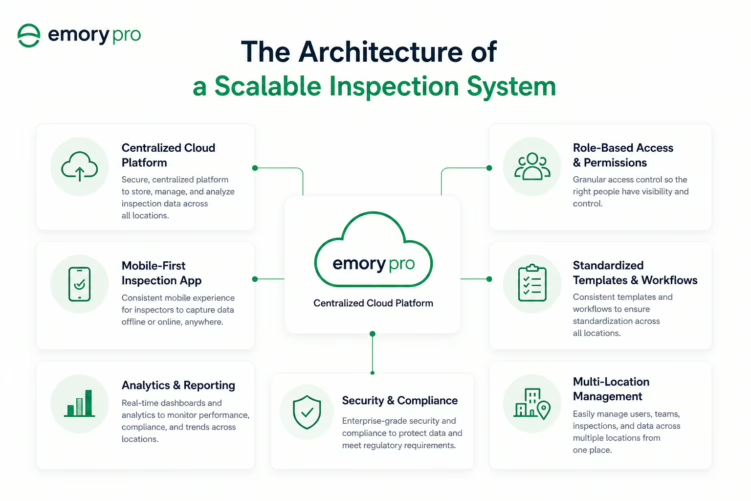
An inspection system designed to scale effectively across multiple locations requires the following architectural elements:

Centralised Template Management

All inspection templates are managed from a central administration interface. The central team can publish new templates or update existing ones, with changes taking effect across all sites simultaneously. Sites can access additional location-specific templates, but the central templates cannot be modified at site level.

This architecture ensures that standard templates remain standard as the organisation grows. It also enables rapid deployment of new inspection requirements across all sites, when a regulatory change requires a new inspection item, it is added once and deployed everywhere, not cascaded manually across fifty site administrators.

Centralised Data Storage with Site-Level Access Controls

All inspection data is stored in a single centralised database. Site-level managers have access to their own site’s data. Regional managers have access to the sites in their region. Central operations and compliance teams have access to all sites.

This access control structure ensures that site-level data is not siloed into site-level systems, which would make aggregate reporting impossible, while ensuring that individual sites cannot access other sites’ operational data.

Automated Finding Routing with Escalation

Findings are routed automatically based on configurable rules that can account for finding type, severity, asset category, and site. High-severity findings can be routed simultaneously to site-level and regional reviewers. Findings that are not reviewed within defined timeframes are escalated automatically to the next level.

This routing architecture ensures that finding management is consistent across all sites, it does not depend on site-specific processes or individual site managers’ email habits.

Aggregate Reporting with Drill-Down Capability

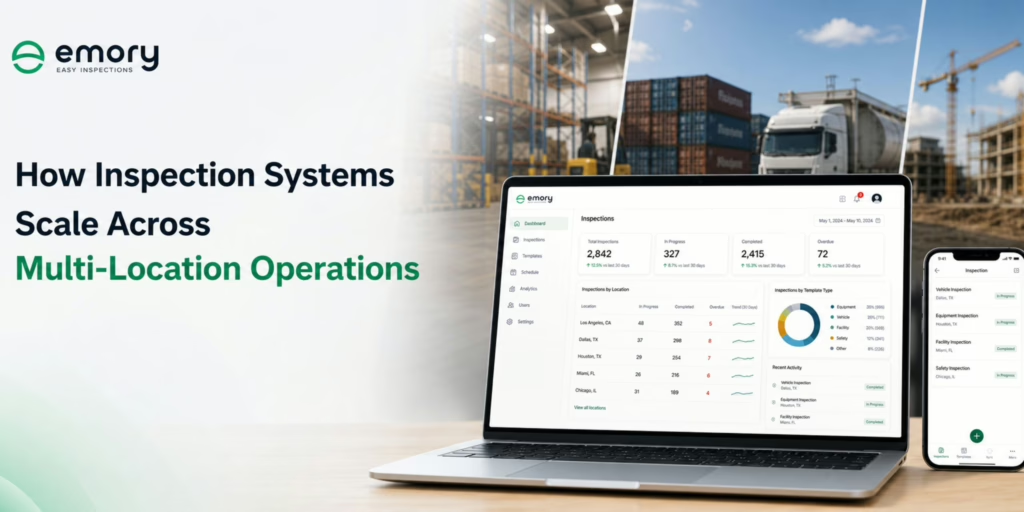
The system produces aggregate reports across any combination of sites, time periods, and data dimensions. The cross-trans logistics network, which operates across multiple depot locations using Emory Pro, was able to produce a consolidated inspection performance report for the entire network within minutes, a task that previously required manual consolidation of site-level spreadsheets.

Drill-down capability means that an aggregate report showing a high defect rate in a specific category can be explored to the site, asset, and individual inspection record level without requiring a separate reporting exercise.

Making the Transition from Site-Level to Network-Level Inspection

Organisations transitioning from site-level inspection systems to a network-level inspection platform should approach the transition in three phases:

  1. Template standardisation, before deploying a new system, review and standardise templates across all sites. The transition is the opportunity to resolve template divergence that has accumulated over time. Standardise first, then deploy.
  2. Data migration and historical records, ensure that historical inspection data is migrated to the new system in a format that preserves the record integrity. Historical records should be retrievable from the new system for audit and compliance purposes.
  3. Process alignment, standardise finding routing rules, review timeframes, and escalation paths across all sites before going live. Site-specific variations should be configured explicitly, not left to individual site managers to develop independently.
Key Takeaway: Inspection systems that scale effectively across multiple locations share three architectural requirements: centralised template management that prevents divergence, centralised data storage with access controls that enables aggregate reporting, and automated finding routing with escalation that ensures consistent management response across all sites. Organisations that build these requirements into their inspection infrastructure early, before reaching the scale at which their absence becomes acute, avoid the expensive remediation that site-level system proliferation requires.

Start your free trial today.

Teams adopt Emory Pro not when inspections fail—but when evidence starts getting questioned.