
How High-Performing Companies Design Inspection Workflows

How High-Performing Companies Design Inspection Workflows

The inspection workflows that produce the best outcomes, highest audit pass rates, lowest defect escape rates, fastest resolution times, strongest compliance records, share structural characteristics that distinguish them from average and below-average inspection operations.

These characteristics are not primarily about technology. They are about how the inspection process is designed: who is responsible for what, at what point, with what evidence requirement, reviewed by whom, escalated how, and measured against what standard.

This article identifies the structural characteristics of high-performing inspection workflows, drawing on patterns observed across logistics, manufacturing, and construction operations, including the operational improvements achieved by Emory Pro users Cross-Trans and PortAgent.
Characteristic 1: Inspection as a System, Not an Activity

The fundamental difference between high-performing and average inspection operations is whether the organisation treats inspection as an activity or as a system.

An activity-based approach to inspection defines what gets inspected, by whom, and on what schedule. It focuses on the completion of inspections. This approach produces consistent inspection completion rates but variable inspection quality, inconsistent evidence standards, and frequent gaps between findings and resolution.

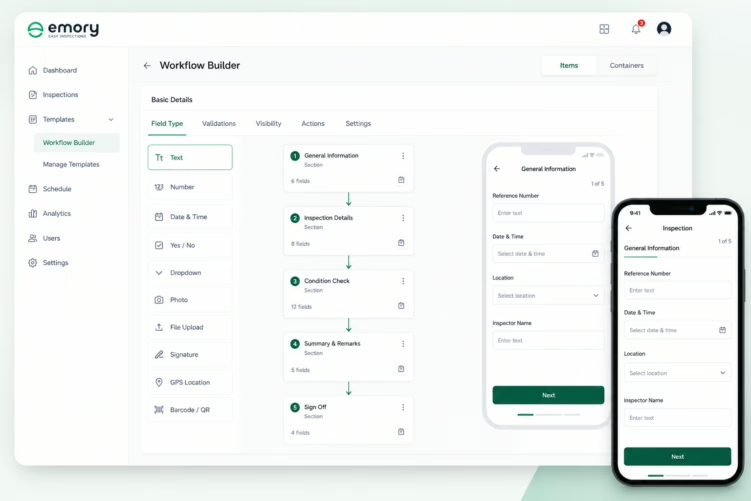
A system-based approach to inspection defines the entire process: inputs (what triggers an inspection), the inspection itself (what is checked, with what evidence, by whom), outputs (findings routing, review, resolution), and feedback (aggregate data used to improve the system). The inspection activity is one component of a managed process.

High-performing inspection operations are systems. They have defined inputs, controlled processes, documented outputs, and feedback mechanisms. The difference in outcomes, audit pass rates, defect resolution times, dispute win rates, is the difference between managing an activity and managing a system.

Characteristic 2: Standardisation That Enables Comparison

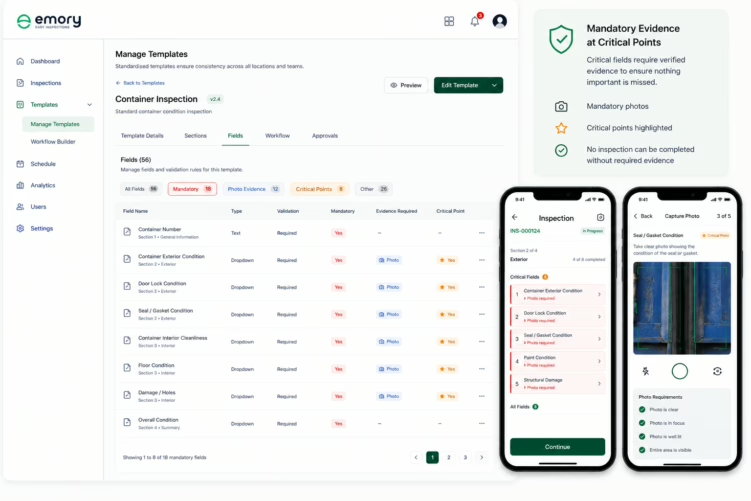
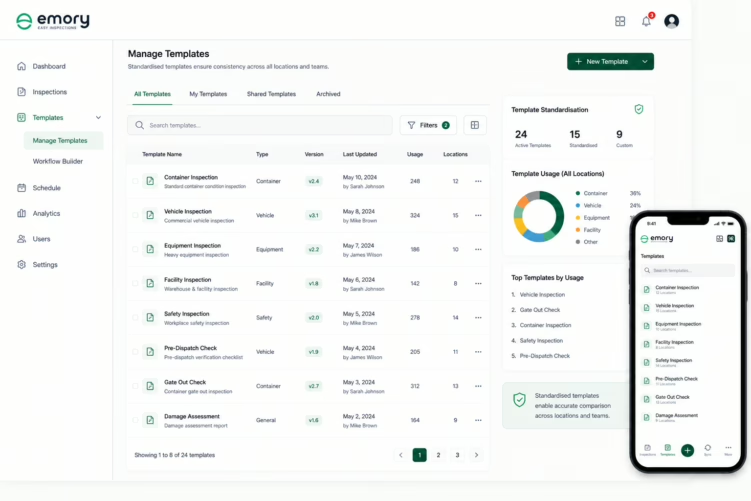
High-performing inspection operations use standardised templates across all locations, assets, and inspectors. Standardisation is not primarily about consistency for its own sake, it is about enabling meaningful comparison.

When the inspection template is the same across all locations, the organisation can compare defect rates between sites, identify locations that are consistently underperforming, and attribute performance variation to real operational differences rather than methodological differences. When templates vary between locations, comparison is unreliable.

Standardisation also makes training faster, inspector substitution more reliable, and audit preparation simpler. An auditor reviewing inspection records from a standardised operation can assess compliance against a single standard. An auditor reviewing records from an operation where each location uses a different template must evaluate each location against its own standard, a significantly more complex and time-consuming assessment.

Characteristic 3: Mandatory Evidence at Critical Points

High-performing inspection operations define which inspection points are critical, where the finding matters enough that photographic evidence is mandatory, not optional, and enforce mandatory capture at those points through the inspection system.

This design decision is operationally important for two reasons. First, it ensures that the inspection records for critical items are uniformly evidenced, regardless of which inspector conducted the inspection. Second, it places the mandatory evidence requirement in the system rather than in inspector discretion, removing individual variation from the evidence quality equation.

The identification of critical inspection points should be driven by two questions: at which points would a finding be most likely to result in a dispute, claim, or audit finding? And at which points is visual evidence most important for distinguishing between subjective assessments, where different inspectors might reach different conclusions, and objective facts?

Characteristic 4: Closed-Loop Finding Management

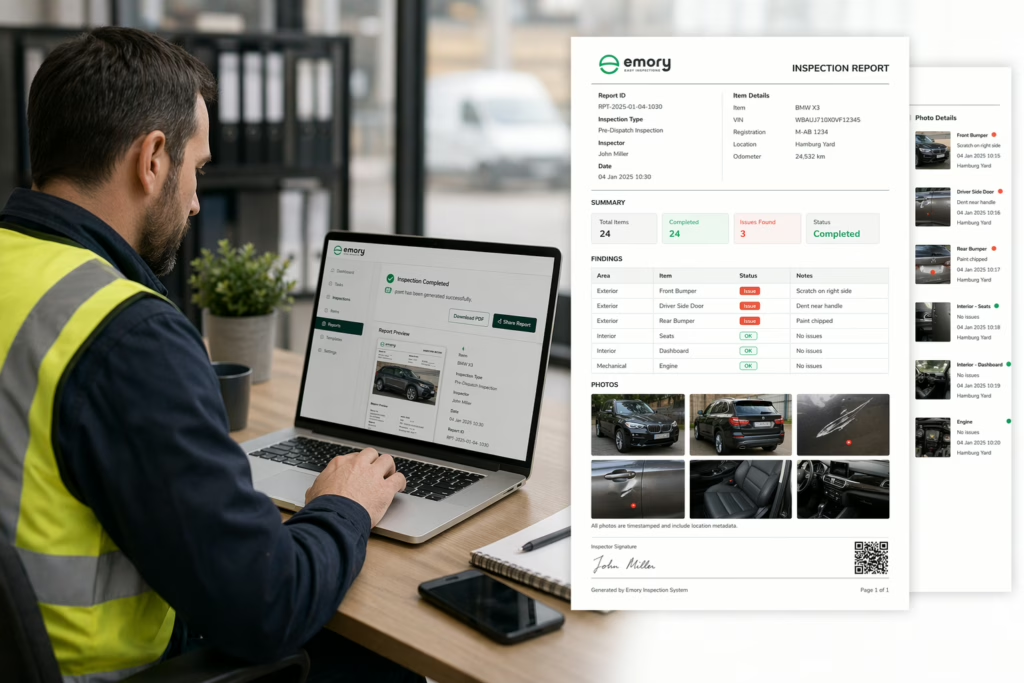
The finding management process is where the greatest performance gap exists between high-performing and average inspection operations. The average operation captures findings and generates reports. The high-performing operation routes findings, enforces review, tracks resolution, and escalates when review or resolution does not occur within defined timeframes.

PortAgent, a logistics operations company that deployed Emory Pro across its inspection operations, achieved a 3× improvement in multi-location inspection capacity without increasing inspector headcount. A significant driver of this improvement was the shift from manual finding routing, where managers received PDF reports and forwarded findings manually, to automated finding routing with enforced review.

The operational calculation is straightforward: if a finding is routed automatically to the reviewer with authority to act on it, within minutes of the inspection being submitted, the time between finding and action is measured in hours. If a finding is routed via PDF email attachment to a general inbox, the time between finding and action is measured in days, when the email is noticed.

Characteristic 5: Real-Time Reporting and Aggregate Analytics

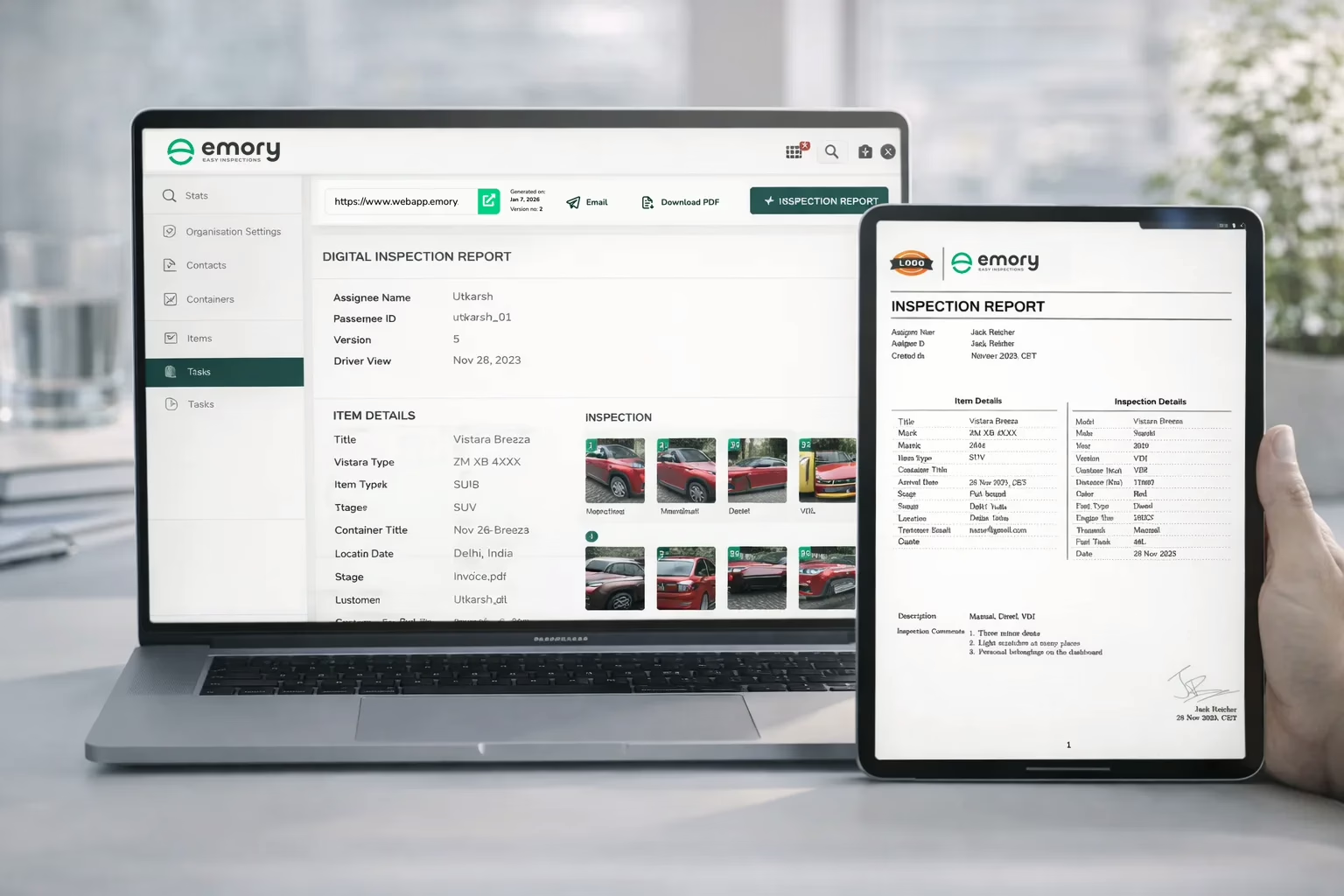
High-performing inspection operations have real-time visibility into their inspection performance. Managers do not wait for weekly or monthly reports to understand what is happening in their inspection operations. They have dashboards that show current inspection completion status, open findings by severity and location, average resolution times, and escalation rates.

This real-time visibility serves two functions: it enables immediate management action when performance deviates from expectation, and it provides the aggregate data that auditors and senior management need to assess whether the inspection operation is functioning as intended.

The aggregate analytics dimension is often undervalued. Most organisations have inspection data but cannot easily answer questions like: which inspection item is most frequently found defective? Which location has the highest defect rate? Which inspector has the highest finding rate, and is that because they are more thorough, or because they are inspecting a more defect-prone asset class?

These questions are answerable from a centralised, queryable inspection database. They are not answerable from a collection of PDF reports.

Characteristic 6: Continuous Improvement Driven by Inspection Data

The highest-performing inspection operations use their inspection data to improve their operations, not just to document them. Inspection data that shows consistent defects at a specific point on an asset type informs maintenance scheduling. Inspection data that shows high defect rates at a specific location identifies an operational problem that needs management attention. Inspection data that shows consistent discrepancies between pre-departure and post-arrival inspections identifies a handling problem in transit.

This feedback loop, from inspection data to operational improvement, requires that the data is structured, queryable, and actually reviewed by people with the authority to act on what it shows. It is a management practice as much as a technology requirement.

Applying These Characteristics in Practice

The table below summarises the structural characteristics of high-performing inspection workflows and the practical actions required to implement each:

Characteristic Practical Requirement Key Metric
System design Define inputs, process, outputs, and feedback loops for the inspection operation Inspection completion rate AND finding resolution rate
Standardisation Deploy identical templates across all locations; local additions are additive only Cross-site defect rate comparison (meaningful only with standardised templates)
Mandatory evidence Define critical inspection points; enforce photograph capture at these points Percentage of critical items with attached photographs
Closed-loop findings Automate finding routing; enforce review with escalation; track resolution Average time from finding to resolution
Real-time reporting Deploy live dashboards for completion status, open findings, and escalations Time from inspection submission to manager awareness of critical findings
Continuous improvement Regular review of aggregate data to identify patterns; action on identified patterns Defect rate trend over time (decreasing = improvement programme working)
Key Takeaway: The inspection workflows that produce the best outcomes share six structural characteristics: they treat inspection as a system, not an activity; they standardise to enable comparison; they mandate evidence at critical points; they close the loop between finding and resolution; they provide real-time reporting; and they use aggregate data for continuous improvement. These characteristics are design choices, not technology features, they require deliberate process design as well as capable tooling.

Start your free trial today.

Teams adopt Emory Pro not when inspections fail—but when evidence starts getting questioned.