
How DSGVO Affects Digital Inspection Workflows in Germany?

For organisations that do business in Germany and use digital inspection workflows the DSGVO is really important. The DSGVO is the version of the General Data Protection Regulation from the EU. It is not something that organisations have to comply with in the background. The DSGVO actually changes how organisations collect inspection data, store it, access it and delete it.

A lot of companies from countries and software vendors do not understand how much the DSGVO affects them when it comes to inspections. When organisations do inspections they often collect photographs, location data and information about the devices and people doing the inspections. The DSGVO says that all of this is data. This means that organisations have to follow rules when they collect and use this data. They have to write down why they are using the data for everything they do with it.

This article is going to talk about how the DSGVO affects digital inspection workflows. It will explain what organisations have to do to comply with the DSGVO when they use inspection platforms. It will also explain how to make sure that the process for collecting and using inspection data follows the rules of the DSGVO. The DSGVO is really important for digital inspection workflows.

What Inspection Data Is Personal Data Under DSGVO?

The DSGVO’s definition of personal data is broad: any information relating to an identified or identifiable natural person. In inspection workflows, this encompasses more than many organisations initially assume:

  • The inspector identity, which is the name, the system login or the device identifier that is linked to an inspection record is what identifies the inspector. This inspector’s identity is very important. All records that are tied to a named inspector or an inspector that can be identified contain the inspector’s data.
  • There are photographs, like inspection photographs that sometimes capture workers or vehicle registration plates or other information that can identify people. These photographs are considered data for the people in them.
  • The GPS location data is also data when it is linked to a specific inspector’s device. This is because it can show where the inspector has been.
  • The device identifiers are also important. The device-level metadata that is linked to an employees device may be considered personal data. This is the case for the device identifiers of the inspector’s device.

Organisations that assumed their inspection data was purely operational, and therefore outside DSGVO’s scope, are often surprised to discover that the data they collect routinely meets the definition of personal data.

Under DSGVO, the relevant question is not whether data relates to a business process, but whether it relates to an identifiable natural person. Inspection data almost always does.

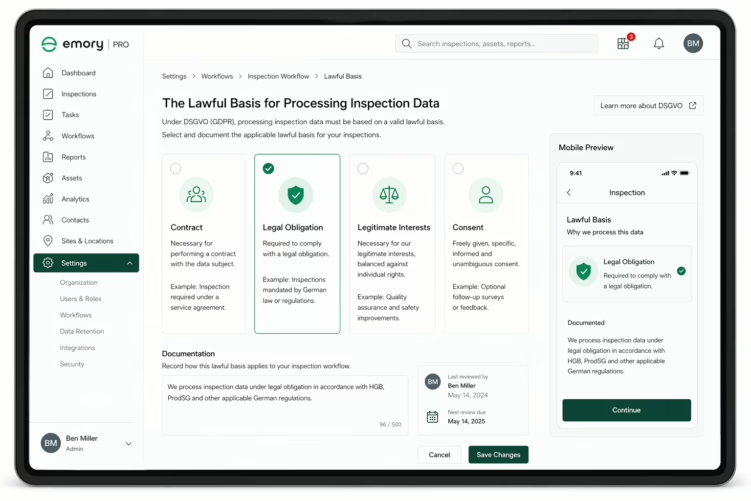
The Lawful Basis for Processing Inspection Data

DSGVO requires that every processing activity involving personal data has a lawful basis. For inspection data, the most commonly applicable bases are:

  • Legitimate interests (Article 6(1)(f)), where processing is necessary for the legitimate interests of the organisation and those interests are not overridden by the data subject’s rights. This basis is commonly applicable to operational inspection records where the processing serves a genuine business purpose and is proportionate.
  • Legal obligation (Article 6(1)(c)), where processing is necessary to comply with a legal obligation, such as health and safety regulations that require inspection records to be maintained.
  • Performance of a contract (Article 6(1)(b)), where inspection data is generated as part of a contractual obligation, such as condition reporting required under a logistics contract.

The lawful basis should be documented in the organisation’s records of processing activities (Article 30 DSGVO) and should be specific to the inspection data category, not a generic statement covering all company data.

Data Minimisation in Inspection Workflows

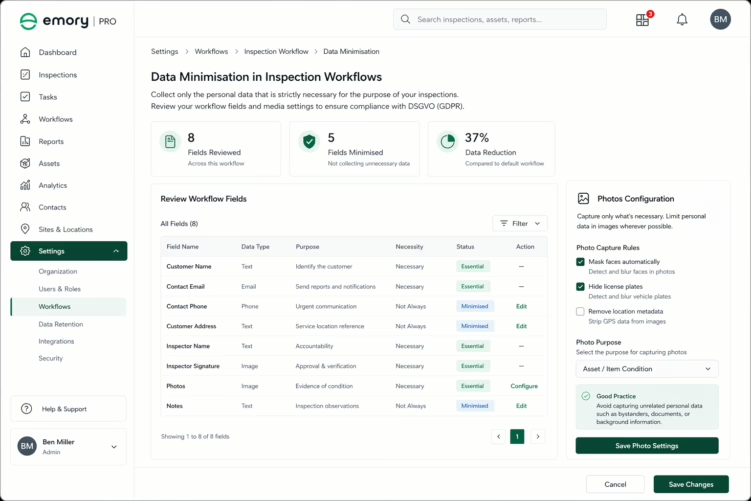
DSGVO’s data minimisation principle (Article 5(1)(c)) requires that personal data is limited to what is necessary for the specified purpose. In inspection workflows, this principle has practical implications:

  • Photographs should only show what is important for the inspection finding. If photos accidentally capture workers faces or other personal details check if they are really needed. If the person’s identity does not relate to the inspection finding then taking such a photo might not be justified. The photo should be relevant to the inspection.
  • GPS data should be captured at the level of specificity required for the inspection purpose. If location verification requires confirming that an inspection occurred at a specific depot, exact GPS coordinates at the precise second may be more data than is necessary; a location tag confirming the depot would be sufficient.
  • Inspector identity data should be stored only for as long as is necessary for the operational and compliance purpose. If the purpose is audit trail maintenance, the retention period should be linked to the audit cycle, not to indefinite operational records.

Retention Periods and Deletion

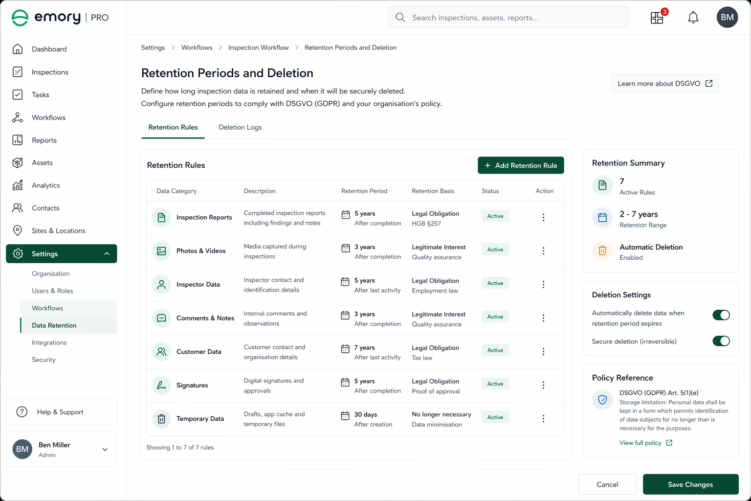
One of the most operationally significant DSGVO requirements for inspection workflows is the obligation to define and implement data retention periods. DSGVO does not specify a universal retention period for inspection data, this depends on the purpose for which the data is processed and any applicable legal obligations.

For inspection records that serve compliance and audit purposes, retention periods are typically driven by:

  • The applicable audit cycle, if regulatory inspections occur every three years, inspection records may need to be retained for at least three years after the last audit
  • Contractual obligations, contracts may specify that inspection records are retained for a defined period after the end of the contract
  • Legal limitation periods, if inspection records could be relevant to legal claims, retention periods should account for the limitation period for such claims

The critical DSGVO requirement is that the retention period is defined, documented, and actually implemented. Indefinite retention of inspection data is not compliant with DSGVO, regardless of how the data is stored or accessed.

Inspection platforms used in Germany must support automated deletion or anonymisation of records after their defined retention period. Manual deletion processes are inadequate for large-scale inspection operations, the volume of records makes manual compliance impractical.

Worker Privacy and Inspection Photographs

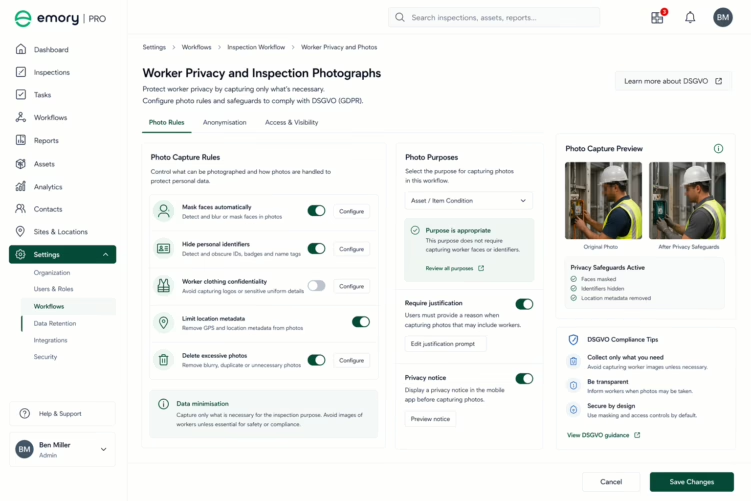
The intersection of inspection photography and worker privacy is one of the most sensitive DSGVO compliance areas for German organisations. German workers have strong privacy rights under both DSGVO and the German Federal Data Protection Act (BDSG), and the German Works Councils Act (BetrVG) gives works councils significant rights in relation to monitoring systems, including digital inspection tools.

Organisations deploying digital inspection tools in Germany should consider:

  • Works council consultation, where inspection tools could be used to monitor worker performance or behaviour, works council consultation may be required before deployment. This is a legal requirement in organisations with a works council, not a best practice recommendation.
  • Worker notification, workers who may appear in inspection photographs, or whose device or location data is captured, must be informed that this data is processed, for what purpose, and by whom.
  • Access controls on inspection records, access to inspection records containing personal data should be restricted to those with a legitimate operational need. Broad organisational access to inspection records is unlikely to be proportionate under DSGVO.

Data Residency and Third-Party Processors

DSGVO requires that personal data transferred outside the European Economic Area receives equivalent protection to that required within the EEA. For German organisations using cloud-based inspection platforms, this means that the platform’s data storage infrastructure must be located within the EEA, or the platform must have appropriate mechanisms in place for cross-border data transfers.

German organisations should ask inspection platform vendors:

  1. Where is inspection data stored? Is the storage infrastructure located within the EEA?
  2. Does the vendor act as a data processor within the meaning of DSGVO? Is a data processing agreement (Article 28 DSGVO) in place?
  3. What subprocessors does the vendor use, and where are they located?
  4. What security measures are in place to protect inspection data?

DSGVO Compliance Checklist for Inspection Workflows

Requirement Action Required
Lawful basis Document basis for each data category in Article 30 records
Data minimisation Review photograph and GPS capture scope for proportionality
Retention periods Define and document retention periods by data category
Automated deletion Implement automated deletion or anonymisation at retention period end
Worker notification Provide DSGVO-compliant privacy notice to all inspection staff
Works council Consult works council before deployment (where applicable)
Data processing agreement Execute Article 28 DPA with inspection platform vendor
Data residency Confirm EEA-based data storage or appropriate transfer mechanism
Access controls Implement role-based access controls on inspection records

How Emory Pro Is Designed for DSGVO Compliance?

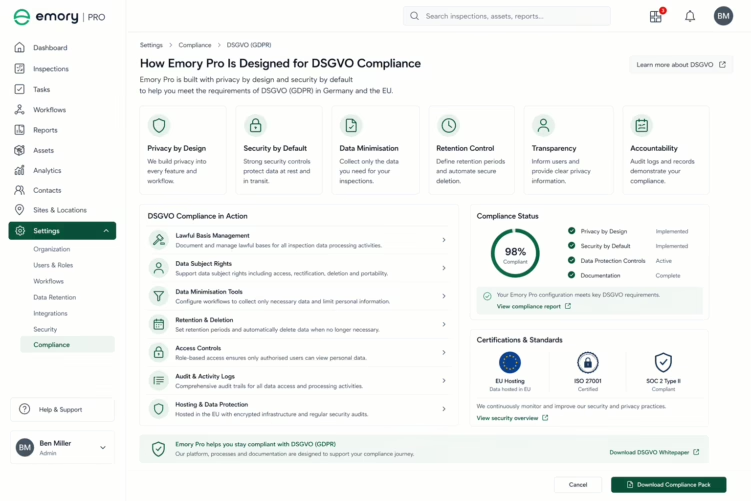
Emory Pro was built with the German market as a primary deployment context. The platform incorporates DSGVO compliance requirements into its architecture rather than adding them as optional features.

Data is stored on servers located within the European Union. The platform supports configurable retention periods with automated deletion. Access controls are role-based and audited. The platform functions as a DSGVO-compliant data processor, with a standard data processing agreement available for execution as part of the onboarding process.

Works council consultation materials, including a description of the data processed, the purpose of processing, and the technical measures in place, are available for organisations that require them.

Key Takeaway: DSGVO is not a background compliance requirement for German inspection workflows, it actively determines how inspection data can be collected, stored, accessed, and deleted. Organisations deploying digital inspection tools in Germany should treat DSGVO compliance as a procurement requirement when selecting inspection platforms, and should document their compliance approach before deployment begins.

FAQ’s

DSGVO is Germany’s data protection law (GDPR) that governs how inspection data, like photos, GPS, and user identity is collected, stored, and used.

A lawful basis is a valid reason to process data, such as legal obligation, contract requirements, or legitimate business interest.

Start your free trial today.

Teams adopt Emory Pro not when inspections fail—but when evidence starts getting questioned.