Quality Control
How Digital Inspections Improve Quality Control In Fresh Produce?
Discover how real-time inspections, photographic evidence, and structured quality control workflows help fresh produce companies improve consistency, reduce waste, and maintain customer confidence.

Fresh produce has a short shelf life.
From the farms to the packing houses and distribution centers, fresh produce goes through several inspection stations before it finally ends up in the stores. During this entire process, it is critical that the quality of the produce is maintained. A small blip in the handling of the produce could cause it to spoil and ultimately be rejected or cause the company to lose customers.
The main challenge that most fresh produce companies face is not the inspection of the produce; rather, it is the way the inspection is documented. Most of them use paper-based checklists and find it hard to communicate the inspection status of the produce in a timely manner.
This is where technology is slowly changing the way quality control is conducted in the fresh produce industry.
The Unique Challenges Of Fresh Produce Quality Control
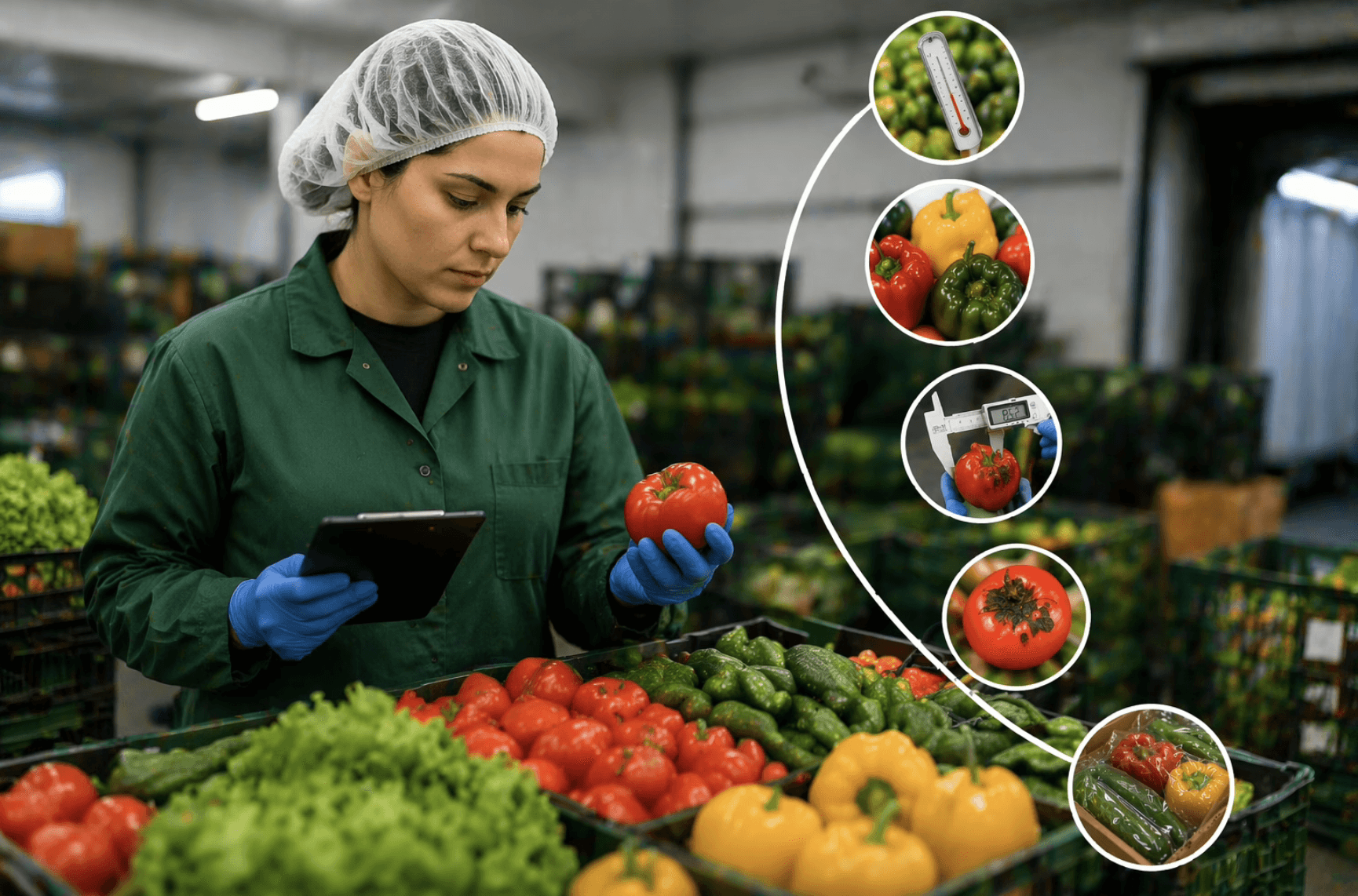
Unlike packaged products, fresh produce is very sensitive to environmental factors.
For instance, temperature, humidity, handling methods, and transportation time can easily impact the quality of the products.
Quality control processes usually involve:
The appearance of the products in terms of color
Size and grading of the products
Evidence of damage or contamination
Storage conditions in terms of temperature
The condition of the packaging
These processes may take place at various levels of the supply chain.
However, due to these processes, documentation becomes a crucial aspect.
If the records of the processes are incomplete or scattered in various systems, tracing the cause of quality problems becomes a challenge.
Why Traditional Inspection Methods Fall Short?
Many produce facilities use paper inspection forms or spreadsheets. Though simple in nature, they pose many operational challenges.
Firstly, it is hard to track inspection activities across various facilities or suppliers.
Secondly, the inspection data is entered into the computer system after the inspection.
Thirdly, photos and evidence of the inspection issues are seldom attached to the inspection report.
With the increase in the complexity of the produce supply chain, the above inspection practices become less reliable.
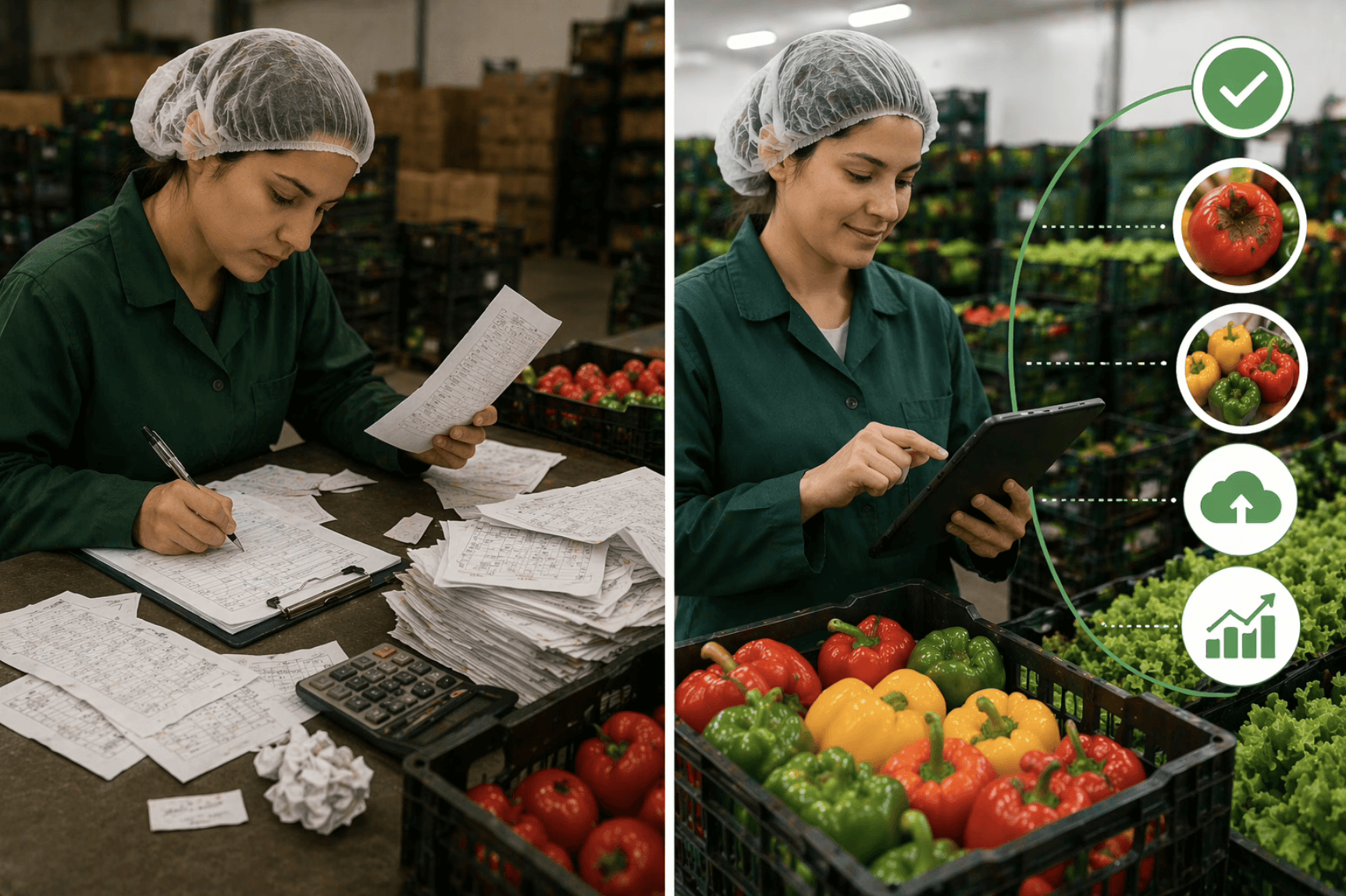
Real-Time Data Capture Improves Inspection Accuracy
Digital inspection tools enable inspectors to record findings directly from their mobile devices during the inspection process.
Instead of writing observations on paper and documenting them later, inspectors can capture everything instantly in real time.
This method improves inspection accuracy in the following ways:
Immediate Documentation of Inspection Findings
Findings are recorded at the moment of inspection, reducing the risk of missing or forgetting critical details.
Automatic Timestamps
Each entry is automatically tagged with the exact time and inspector identification, ensuring traceability.
Centralized Data Storage
Inspection reports are instantly available to quality managers and supervisors, enabling faster review and action.
Photo Documentation Provides Clear Evidence
For fresh produce, the process of inspection may involve a lot of visual assessment.
The inspector may have to identify bruises, discolored areas, mold development, or any other form of defect. It may sometimes be hard to clearly convey these problems in writing.
Digital inspection systems enable inspectors to take pictures during the process of inspection and attach them to the reports.
Photo documentation helps teams:
Verifying the results of the inspection
Communicating with suppliers
Providing proof in case of quality disputes
Tracking quality problems
When inspectors include a form of visual evidence, the results of the inspection are greatly accurate.
Standardized Inspection Checklists Improve Consistency
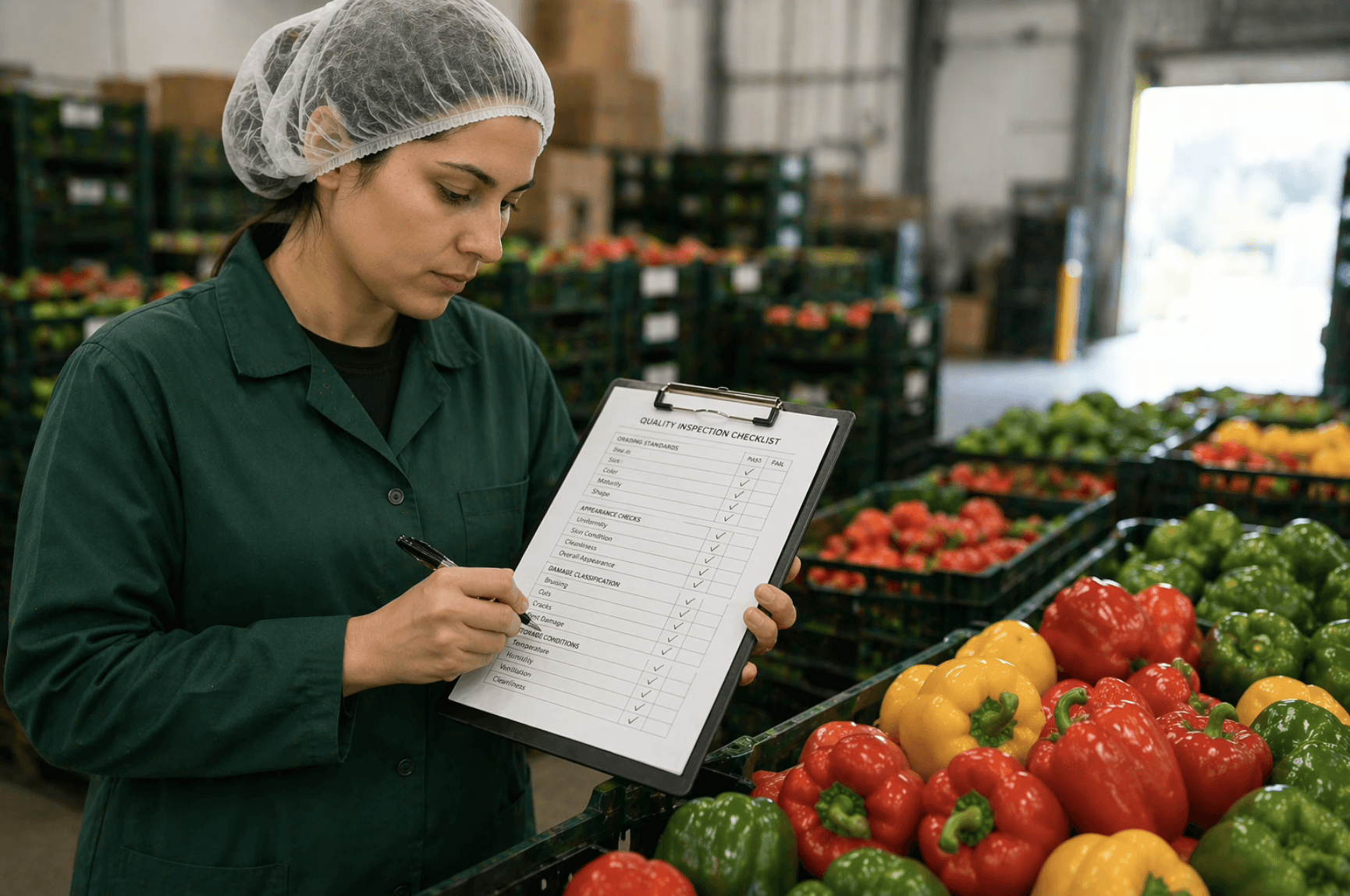
The quality control team may comprise multiple teams working in various farms, packing houses, or warehouses.
Inspectors may have different perceptions of the quality of the produce if the guidelines are not clearly defined.
Digital inspection platforms have helped in the creation of a standard checklist of inspections.
The inspectors are guided through a set of quality parameters:
Grading standards
Appearance checks
Damage classification
Storage conditions
Because every inspector follows the same checklist, inspection results become more consistent across facilities.
Faster Issue Resolution Across The Supply Chain
The quality control team may comprise multiple teams working in various farms, packing houses, or warehouses.
Inspectors may have different perceptions of the quality of the produce if the guidelines are not clearly defined.
Digital inspection platforms have helped in the creation of a standard checklist of inspections.
The inspectors are guided through a set of quality parameters:
Better Traceability For Compliance And Audits
Regulations on food safety require companies to keep detailed inspection records.
Auditors can also review these records to ensure that quality control processes are being adhered to.
Digital inspection solutions can assist organizations in keeping clear documentation that includes:
Time stamps from inspections
Identification of inspectors
Photographic evidence
Past inspection records
Keeping all these in one place can assist in preparing for any audit or compliance review.
Why The Fresh Produce Industry Is Moving Toward Digital Inspections?
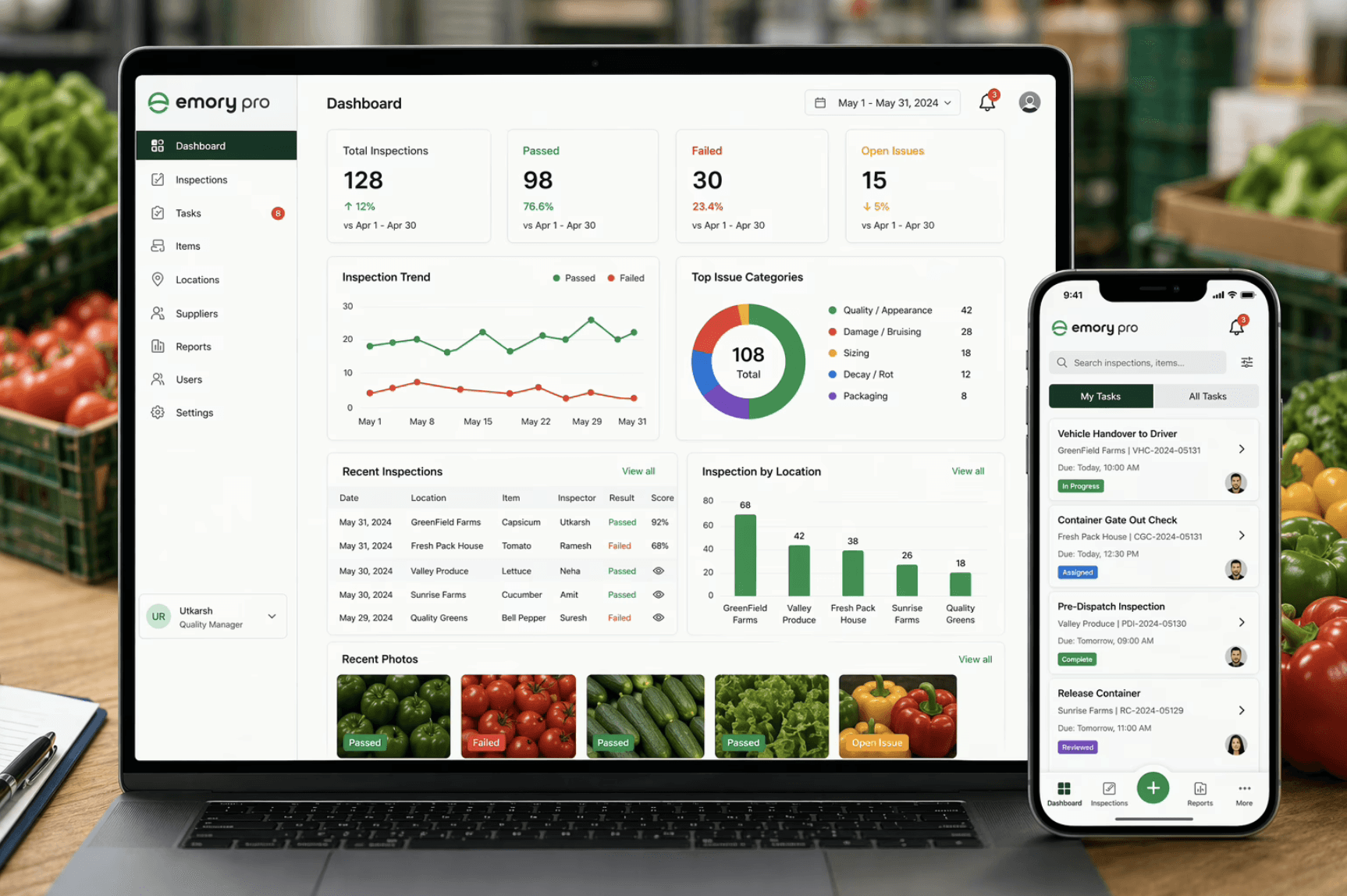
Produce companies operate under constant pressure to deliver fresh products while minimising waste.
Digital inspection tools help improve how quality data is captured and shared across the supply chain.
Fresh Product Organisations that adopt digital inspections often see improvements in:
Inspection accuracy
Response time to quality issues
Supply chain transparency
Compliance documentation
Over time, these improvements help reduce spoilage and strengthen supplier relationships.
How Emory Pro Supports Produce Inspection Workflows?
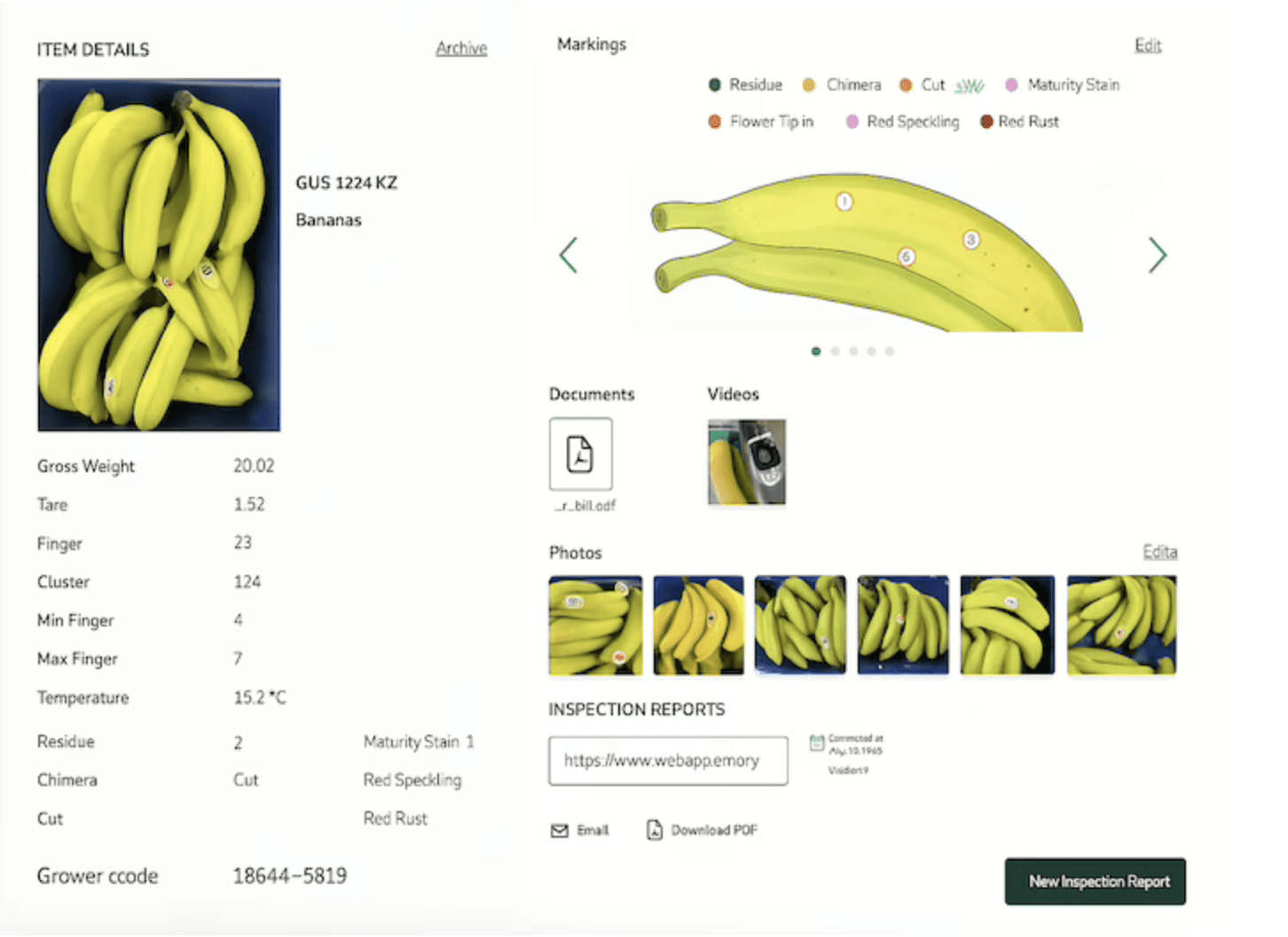
At Emory Pro, we often see produce companies face challenges in managing scattered inspection records, particularly when these inspection activities take place at various farms, warehouses, and other points in the supply chain.
Digital inspection workflows help create some order in the inspection process.
Emory Pro allows teams to create inspection templates, conduct and record inspection findings, and store these documents in a centralized system. This helps quality managers review inspection history, identify recurring quality issues, and maintain consistent inspection records.
For companies dealing with a high volume of fresh produce, a structured inspection workflow may help improve quality monitoring.
Final Thoughts
With fresh produce quality control means keeping a watchful eye on all aspects of the supply chain.
Conventional methods of inspection can sometimes slow down the process and reduce its reliability, especially in cases where the process involves multiple locations or suppliers.
Inspections conducted digitally offer a sense of organization and clarity. With real-time reporting and photo reporting enabled through digital inspection systems, it becomes easier to respond to quality problems.
For fresh produce companies aiming at high-quality operations with minimal risks involved in the process, digital inspections have now become an essential part of quality management.
FAQ's
What are digital inspections in the fresh produce industry?
Digital inspections refer to the use of mobile apps or software used in the inspection of fresh produce, recording of results of the inspection, and attaching a photo of the results of the inspection.
How do digital inspections help in improving fresh produce quality?
Can digital inspections help in reducing fresh produce waste?