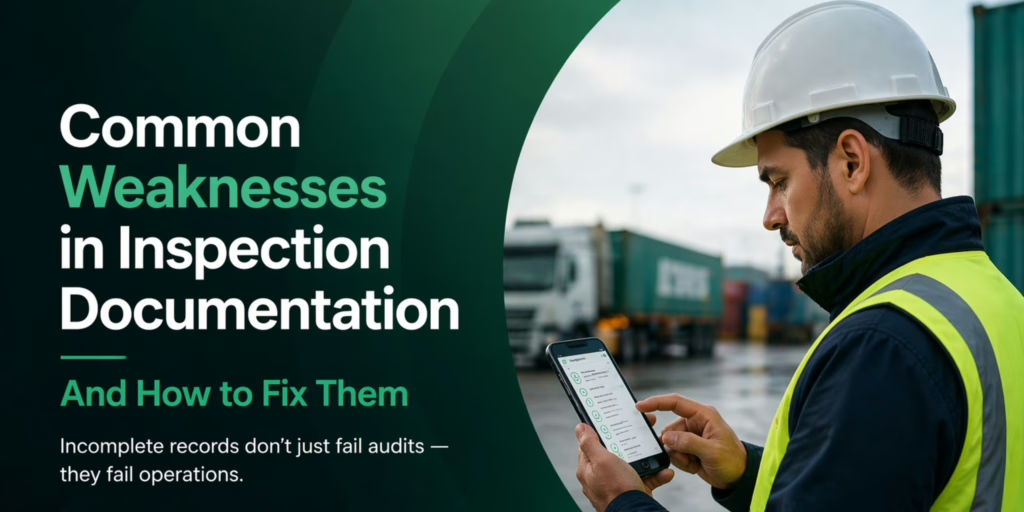
Common Weaknesses in Inspection Documentation (And How to Fix Them)

Inspection documents that are incomplete, inconsistent, or lacking evidence don’t just fail audits. They also fail the organisations that rely on them for dispute resolution, operational accountability, and performance management. A checklist may have been signed. A report may have been submitted. But on closer inspection, these records often can’t do what inspection documents are meant to do.

The weaknesses that cause documents to fail are rarely accidental. They’re built into the system — the same problems recurring across industries and organisations of all sizes, because they stem from the limitations of paper-based or partially digitalised inspection processes.

This article examines the most common documentation failures, explains why each matters operationally, and describes how they can be resolved with a purpose-built digital inspection app.
Weakness 1: Missing or Retroactive Timestamps

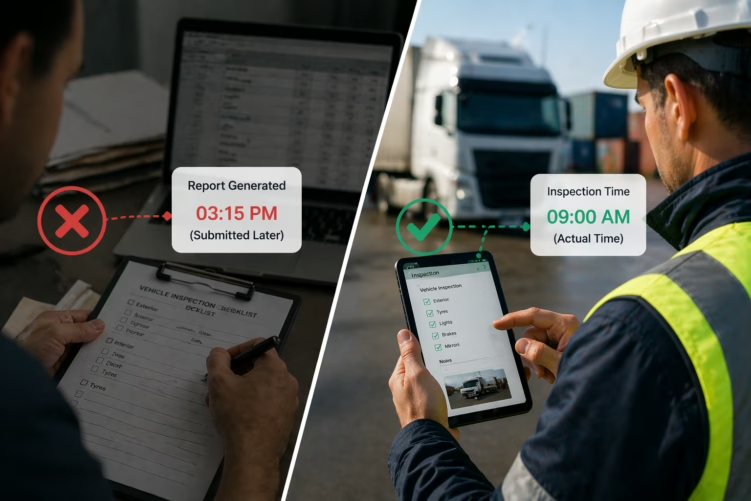
One of the most persistent problems with inspection records is that timestamps reflect when a report was generated or submitted, not when the inspection actually took place.

In paper-based workflows, an inspector completes a checklist in the field and enters the data later at a desk. The system logs the data entry time, not the inspection time. With some digital forms, the record is completed on-site but submitted hours later, and again, the system captures the submission time, not the moment of inspection.

This becomes a serious liability in disputes. If a vehicle is inspected at 9:00 and involved in an incident at 14:00, a report timestamped at 15:00 doesn’t establish the vehicle’s pre-incident condition. An auditor or court cannot determine from that record whether the inspection preceded the event.

The fix: Emory Pro captures timestamps at the moment each inspection item is recorded, automatically, at the system level. Inspectors don’t enter the time; the platform logs it. That’s the difference between evidence and testimony.

Weakness 2: No Location Verification

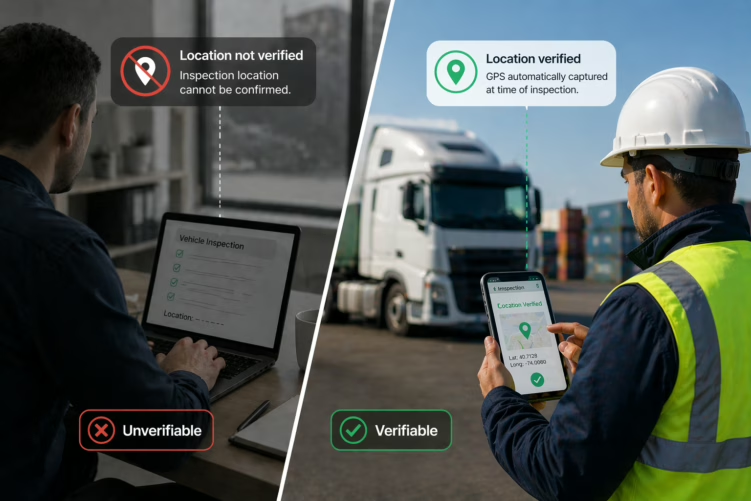
Documentation without location verification is ultimately unverifiable. An inspector assigned to check a vehicle at a depot could, in theory, complete the form from an office elsewhere. Without GPS confirmation, there’s no way to confirm the inspector was physically present at the inspection point.

For vehicle handover inspections, equipment checks, and site safety reviews, location is not just context, it’s part of the result. A handover report that can’t confirm it was completed at the handover location may hold little weight in a damage dispute.

The fix: Emory Pro automatically embeds GPS coordinates at the moment a record is created. Location isn’t entered by the inspector or pulled from a report export, it’s captured in the record metadata, tied to the time and the authenticated user who submitted it.

Weakness 3: Inconsistent Evidence Standards

Photo documentation is common in inspection workflows, but the quality and consistency of that documentation varies widely. Some inspectors photograph every relevant point from multiple angles; others skip photos entirely or capture images that are too dark, too distant, or poorly framed to be useful.

This creates two problems. First, it makes cross-inspector comparisons unreliable, two records both marked “Good condition” may carry very different evidentiary weight. Second, it means some records are defensible in disputes and others aren’t, regardless of the inspection outcome.

The fix: Emory Pro allows inspection templates to designate specific points at which photo capture is mandatory. The app prevents completion of those checklist items unless a photograph has been captured and attached. This isn’t about distrust, it’s about ensuring every record meets the same evidence standard, regardless of who conducted the inspection. The Photo Doodle feature goes further, letting inspectors annotate images directly to highlight findings clearly.

Weakness 4: No Chain of Custody

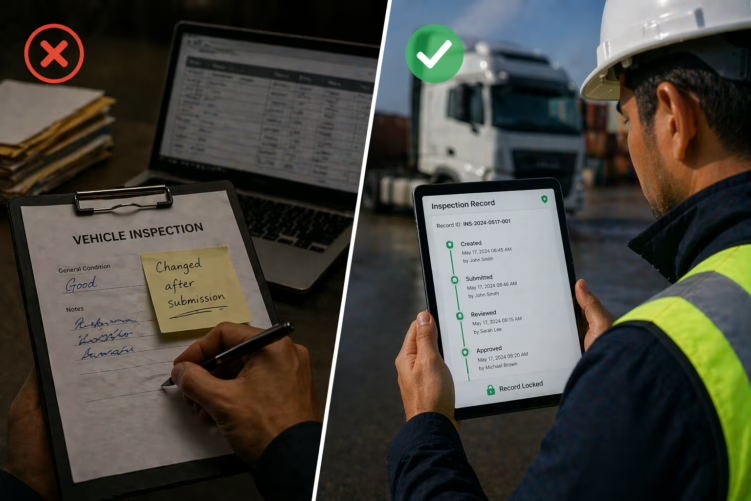
Inspection records frequently lack any audit trail. Who accessed the record after submission? Was it modified? If so, by whom, and when? Who reviewed it for sign-off?

These are exactly the questions that arise during audits, disputes, and compliance investigations. A record that has been edited after submission, even for a legitimate reason like correcting a spelling error, is no longer fully trustworthy unless that change is logged. Without version history and access logs, there’s no way to demonstrate the record’s integrity.

The fix: Emory Pro logs every access and modification event at the record level. Once submitted, records are locked. Any amendment creates a new version linked to the original, with the modifier’s identity and the timestamp of the change preserved. Reviewers can see exactly who viewed a record and when.

Weakness 5: Inspector Identity Not System-Authenticated

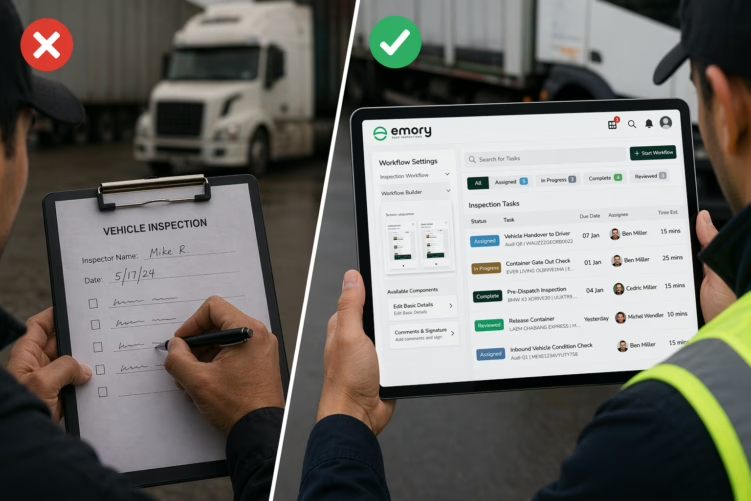
Most inspection records identify the inspector by name, typed into a field, or sometimes not recorded at all. A record that reads “Inspector: J. Smith” is a statement, not proof. It doesn’t confirm that J. Smith completed the inspection, that they were authorised to do so, or that someone else didn’t create the record under their name.

For routine inspections this may seem minor. For safety-critical checks, insurance claims, or regulatory submissions, inspector identity and qualification matter. An uninspected vehicle submitted as inspected, or an inspection completed by an unqualified individual, can expose an organisation to significant liability.

The fix: Emory Pro authenticates inspectors at the system level through login credentials and device registration. The authenticated identity is embedded in the record metadata automatically. A typed name field is a supplementary annotation; the primary identity record is system-verified.

Weakness 6: Findings Not Linked to Resolution

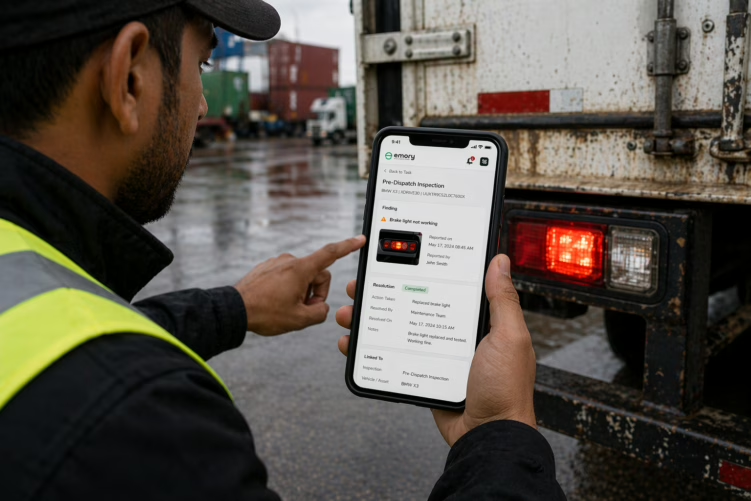
Most inspection systems are good at recording findings. Far fewer are built to track what happens next. Whether a finding was reviewed, escalated, actioned, or resolved is typically handled outside the system — and rarely documented in a way that connects back to the original record.

The result is incomplete documentation. Auditors and investigators want to see not just that a finding was recorded, but that it was handled. An open finding with no review trail is a red flag — evidence of a process that identifies issues but doesn’t follow through on them.

The fix: Emory Pro routes findings through the platform from recording to resolution. The record includes the finding, the reviewer, the review date, the action taken, and the resolution status. Findings don’t sit in isolation — they move through a managed lifecycle within the same system that captured them.

Weakness 7: Non-Standardised Templates Across Locations

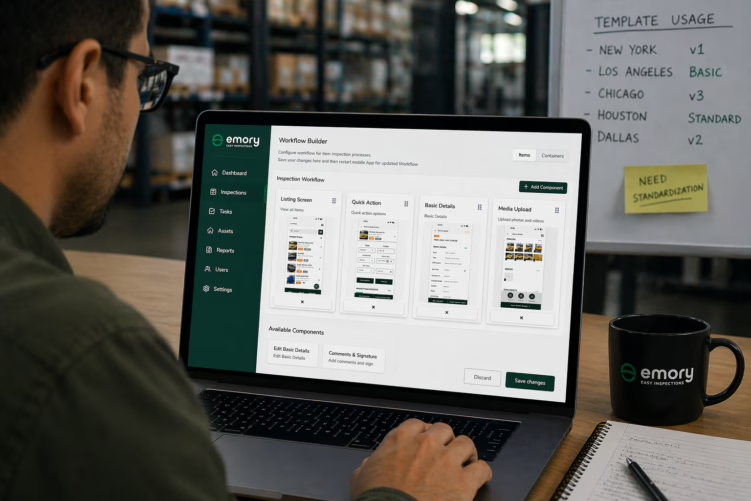
Organisations operating across multiple sites often end up with inspection templates that differ in structure, depth, and evidence requirements. One location requires photos at three points; another requires seven. One checklist has ten items; another has twenty-five.

This inconsistency makes cross-site reporting unreliable. Pass rates can’t be fairly compared when inspection standards differ between locations. Auditors can’t efficiently assess compliance when each site operates to its own template.

The fix: Emory Pro enables template standardisation from a central administration interface. Local variations can be additive — adding site-specific items on top of a shared standard — rather than replacing the standard entirely. The core template defines minimum requirements across all locations; local templates extend it where needed.

Key Takeaway

The documentation weaknesses that cause the most operational and legal damage, missed timestamps, absent location data, inconsistent evidence, no chain of custody, are systematic failures, not individual ones. They’re the product of inspection tools designed for data capture, not for evidence. Addressing them requires the right system design, and that’s precisely what Emory Pro is built to deliver.

Start your free trial today.

Teams adopt Emory Pro not when inspections fail—but when evidence starts getting questioned.